
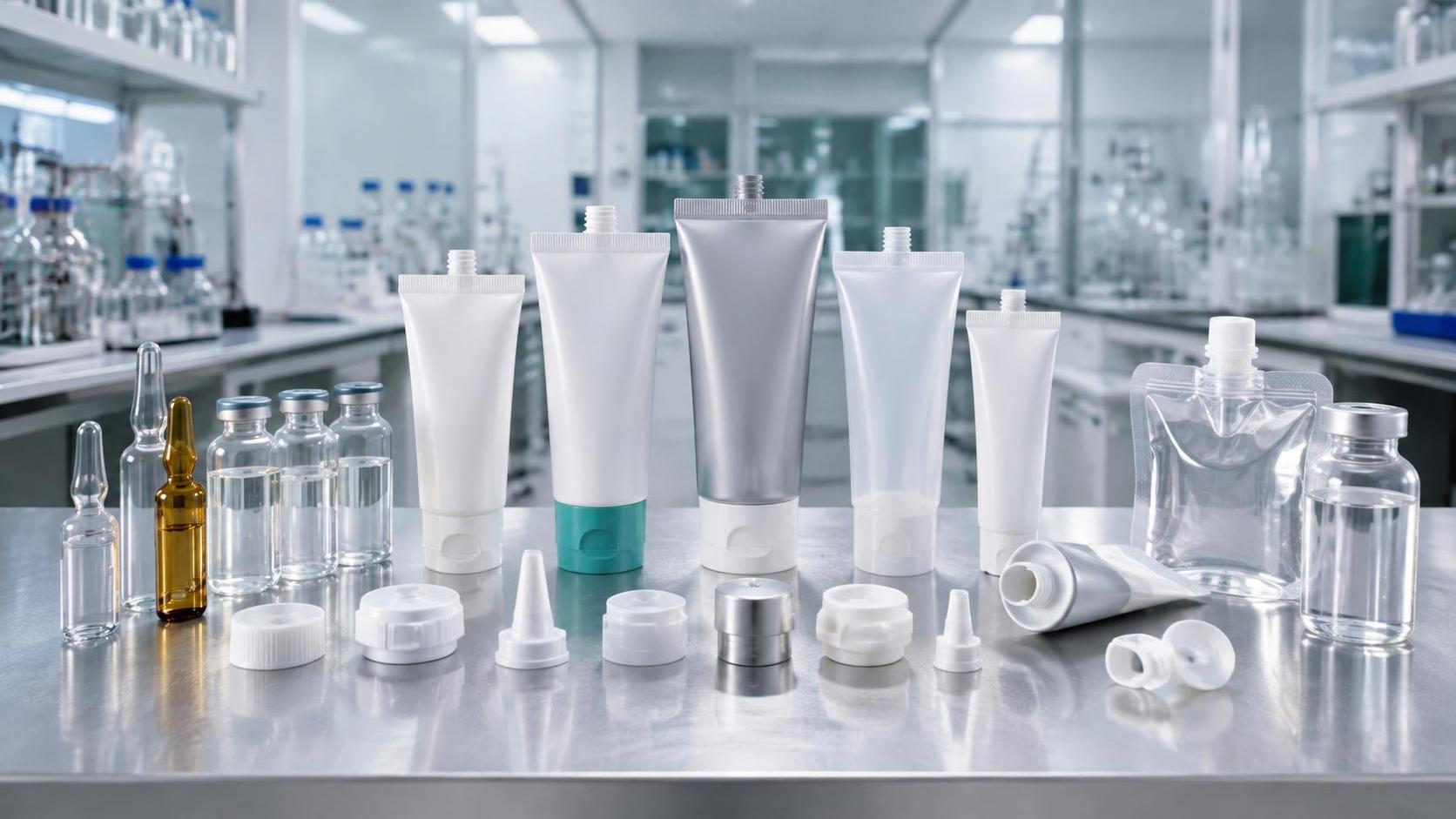
A liquid medicine can appear stable during formulation review yet become difficult to dispense, lose sensory quality, or show unacceptable variability after filling into the wrong tube. The packaging is part of the product-contact system: it affects moisture and oxygen exposure, interaction with the formulation, closure integrity, patient handling, and the consistency of each dose.
For technical evaluation, the right Pharmaceutical Tube is selected by starting with the liquid’s risk profile rather than with tube diameter, appearance, or unit cost. Identify what can destabilize the formula, how the product will be filled and used, and what protection must remain intact through the claimed shelf life. Material structure, shoulder and nozzle design, cap system, process compatibility, and verification testing should then be assessed as one package rather than separate purchasing items.
Start with the actual behavior of the liquid medicine
“Liquid” covers products with very different packaging demands. A low-viscosity oral gel, a topical antiseptic, a suspension, and an alcohol-containing solution may all be dispensed from tubes, but they place different stresses on the package. Before comparing suppliers or structures, assemble a formulation-and-use brief that answers the questions most likely to affect tube performance.
- Is the medicine water-based, oil-based, alcoholic, acidic, alkaline, or solvent-containing?
- Does it contain volatile components, fragrances, essential oils, surfactants, preservatives, or oxidation-sensitive actives?
- Is the product a true solution, emulsion, suspension, gel, or shear-sensitive system?
- What is the viscosity at filling temperature and at expected storage and use temperatures?
- Can the formula be contaminated after opening, or is it intended for repeated application?
- Does the medicine require narrow dosing control, a fine stream, or a broad-area application?
This initial work prevents a common failure in packaging selection: treating a tube as merely a flexible container. A product that contains volatile solvents may need much stronger barrier protection than a water-based gel. A suspension may need a larger outlet to avoid clogging, while a thin topical liquid may require an orifice and cap arrangement that prevents flooding and drips. A formula with an oxidation-sensitive active may benefit from a structure that limits oxygen ingress, but barrier selection alone cannot compensate for a weak closure seal.
Choose the tube structure according to barrier risk
Tube materials differ most significantly in their resistance to gases, water vapor, light, aroma migration, and external contaminants. The appropriate option depends on what the medicine must be protected from and what it may lose to the surrounding environment.
An aluminum barrier laminate can be appropriate when a formulation needs a strong and consistent barrier. Its value is not simply that it contains aluminum; the relevant question is whether the laminate structure, internal contact layer, seams, shoulder interface, and closure work together under storage and repeated squeezing. For formulations where barrier control is a principal concern, technical teams may review ABL Tube‑The Proper Aluminum Laminate Packaging Solution for Pharmaceutical as one possible packaging format during structural comparison.
Do not assume that maximum barrier is always the best answer. A highly protective structure may add complexity, affect flexibility, or be unnecessary for a stable aqueous product. Conversely, a lower-barrier tube chosen only because the product is “not sensitive” can become a problem when the formula includes a volatile flavoring, oxidation-prone component, or active that is affected by water loss. The decision should be supported by the product’s stability protocol, not by a generic ranking of materials.
Compatibility is broader than “the tube does not dissolve”
Compatibility screening should look for more subtle interactions than obvious cracking or leakage. A tube can remain visually intact while the formulation changes in odor, color, pH, viscosity, assay, preservative level, or appearance. The contact layer can also absorb certain components, release extractable substances into the medicine, or become stressed by surfactants and solvents over time.
Pay particular attention when the formulation contains ethanol or other alcohols, essential oils, high concentrations of surfactants, strong acids or bases, oxidizing agents, or active ingredients with known adsorption sensitivity. These materials do not automatically rule out a given tube, but they make representative compatibility testing more important. Testing should use the final formula whenever possible, including relevant processing conditions and realistic headspace.
Temperature matters. A package that appears acceptable at room temperature may soften, deform, delaminate, or alter the product under elevated storage conditions. Freeze-thaw exposure can create another failure mode, especially for emulsions and suspensions. The evaluation plan should reflect anticipated distribution, warehouse, and user conditions rather than relying only on a static sample stored in a controlled office environment.
Inspect every product-contact component
The tube body is only one part of the contact system. The shoulder, nozzle, internal seal area, cap liner or plug, tamper-evident feature, and any applicator can all contact the product or product vapor. A technically sound laminate body cannot resolve a compatibility issue created by an unsuitable closure resin or sealing compound.
Request a clear description of material composition for each contact component and define which samples will be used for evaluation. A supplier’s standard tube may be built with different shoulder, cap, or nozzle options, and changing one part can change compatibility or sealing behavior. This is especially important late in development, when a cap style is changed for usability without rechecking the package-performance assumptions.
Match the opening and closure to viscosity, dose, and use environment
In use, dispensing quality often becomes the most visible measure of whether the package was selected properly. A tube intended for a liquid medicine must deliver a manageable amount without splashing, dribbling down the shoulder, or trapping an excessive residue near the outlet. The ideal opening is determined by flow behavior, not by product volume alone.
A larger orifice may help a viscous suspension or gel exit smoothly, but it can make a low-viscosity medicine difficult to control. A narrow nozzle can improve targeting for localized topical application, although it may increase the chance of blockage where the formula forms a crust after exposure to air. A long dispensing tip may improve precision but must be assessed for cleaning, residual retention, cap fit, and mechanical damage during distribution.
Closure choice also affects safety and stability. Screw caps, flip-top closures, dispensing nozzles, and tamper-evident systems have different strengths. The suitable option depends on whether the user needs one-handed operation, whether a controlled stream is needed, whether the product may leak in multiple orientations, and whether evidence of first opening is required by the product specification. A cap that is convenient but easily cross-threaded can create recurring leakage complaints. A closure with excessive opening torque may be unsuitable for users with limited hand strength.
Evaluate the filled tube in normal use, not only in a laboratory squeeze test. Repeated opening and reclosing, storage on its cap, accidental compression in transit, and product residue around the nozzle can reveal issues that are not visible on an empty sample.
Check filling and sealing before freezing the specification
A tube may meet material requirements but still perform poorly on the filling line. The filling process affects the tail seal, trapped air, fill-weight consistency, product smearing near the seal area, and cosmetic appearance. These are not merely production matters: a contaminated or poorly formed tail seal may compromise integrity.
During packaging trials, confirm that the selected tube diameter, length, shoulder geometry, and tail design are compatible with the filling equipment and intended fill volume. The tube should have sufficient headspace and tail length for reliable sealing without producing an unnecessarily long, weak, or distorted crimped area. Product viscosity at filling temperature must be considered because it changes both fill behavior and the likelihood of air entrapment.
Key trial observations include:
- Whether the filling nozzle reaches the intended depth without damaging the tube interior or introducing excessive air.
- Whether product contaminates the seal zone or migrates into the tail during handling.
- Whether sealing parameters create a consistent seal without overheating, incomplete fusion, or laminate distortion.
- Whether the coded area remains legible and positioned correctly after sealing.
- Whether filled tubes withstand compression, orientation changes, and expected transport handling without seepage.
A technical specification should define measurable acceptance criteria rather than relying on a visual statement such as “seal looks good.” Seal width, seal appearance, leak-test method, torque range where applicable, dimensional tolerances, and relevant performance tests should be agreed before routine supply begins.
Build the evaluation around the product’s real failure modes
The most efficient way to compare tube options is to identify likely failure modes and then ask what evidence addresses each one. For example, if the principal concern is evaporation, request data and test design relevant to mass loss and barrier performance. If the concern is accidental leakage, focus on the closure, seal, and tube deformation under pressure. If the medicine is a suspension, examine redispersibility and dispensing after storage, including performance near the end of pack life.
This approach avoids overloaded specifications that mention every possible test without explaining why it matters. It also prevents a narrow review focused only on material grade. A robust selection file normally connects the formula’s risks to the package features, trial conditions, and acceptance decisions used to address them.
Questions that reveal weak assumptions early
Before approving a tube, ask whether the chosen design has been tested after repeated dispensing, whether the package remains stable in the intended orientation, and whether compatibility work includes all product-contact parts. Confirm whether the final artwork, printing process, and coding location interfere with inspection or traceability requirements. Where product protection depends on a barrier layer, ensure the assessment accounts for folds, flexing, tail sealing, and any area where the laminate is converted into the finished tube.
It is also useful to distinguish between a sample that is suitable for a marketing review and one that represents routine production. Hand-made or early development samples can be valuable, but final approval should be based on a specification that reflects production materials, construction, decoration, and closure configuration.
Balance sustainability requirements with pharmaceutical protection
Environmental expectations should be addressed at the design stage, but they should not cause essential product-protection requirements to be overlooked. A simplified material structure may support certain waste-management goals, yet it may not provide the barrier needed for every liquid medicine. The practical choice is the structure that protects the formulation for its intended shelf life while meeting the applicable packaging and disposal objectives established for the product.
Ask suppliers to clarify the structure rather than accepting broad environmental descriptions. Technical reviewers need to know which layers provide barrier function, which parts are separate components, and whether changes in material selection alter processing, compatibility, or end-of-life assumptions. A sustainability claim is not a substitute for evidence that the package remains fit for pharmaceutical use.
Set approval gates instead of making a single early decision
Tube selection is safer when it progresses through defined gates: initial material screening, compatibility assessment, filling-line trial, package-integrity evaluation, stability confirmation, and final production specification. A tube can move forward at one stage while remaining conditional at the next. This is more realistic than treating an early sample approval as final confirmation.
The final decision should document why the selected Pharmaceutical Tube suits the liquid’s chemistry, barrier needs, dispensing method, closure requirement, and manufacturing process. When each requirement is linked to a test or technical rationale, later changes in formula, cap design, tube diameter, or filling conditions are easier to evaluate without reopening the entire packaging program.
Can't find what you're looking for ?
Leave a Message we will call you back quickly!
Product Classification
Professional Service
Interested? Leave your contact details.
Search Starts Here