
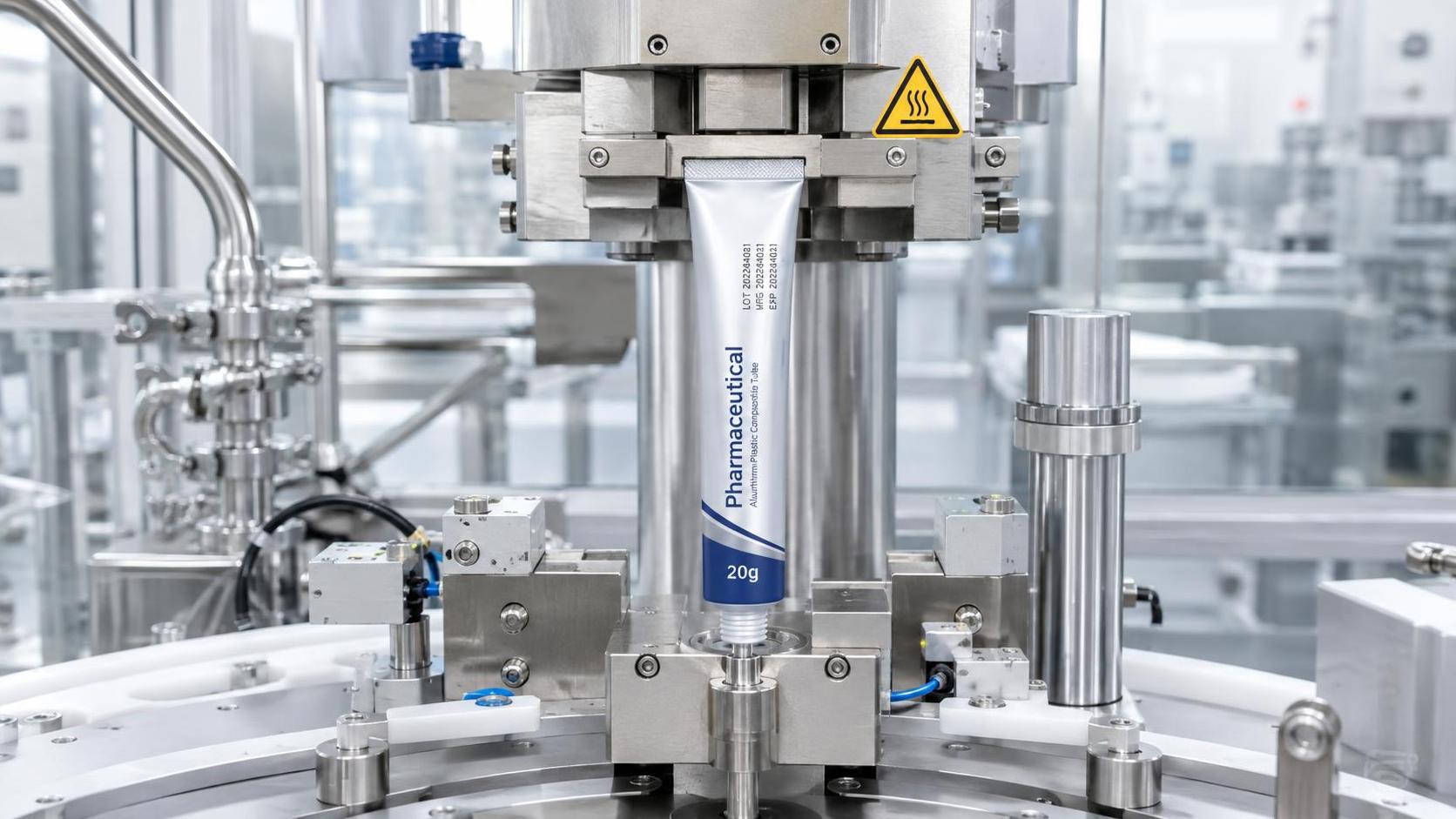
Leakage from a Pharmaceutical Tube during filling is more than a housekeeping problem. A small escape of ointment, gel, cream, or paste can contaminate equipment, distort fill-weight control, weaken the final seal, and create unnecessary rejection at inspection. In a pharmaceutical environment, where every pack must protect both the formulation and the patient, a leaking tube deserves immediate attention—not a temporary adjustment followed by hope.
For operators, the challenge is that leakage rarely comes from one isolated cause. It usually develops where several variables meet: the tube body, shoulder, open end, filling nozzle, product temperature, dosing pressure, sealing setup, and the way tubes move through the line. Finding the true source quickly helps protect batch consistency while avoiding unnecessary downtime.
This practical guide focuses on what operators can check, adjust, and communicate when a Pharmaceutical Tube leaks during filling or immediately after sealing.
Start by identifying where the leakage begins
The visible product spill is not always the original failure point. Before changing machine settings, observe the tube carefully and classify the leakage location. This simple step narrows the investigation considerably.
- Leakage at the open tail end before sealing: often related to overfilling, poor nozzle positioning, excess filling pressure, product stringing, or tube instability in the holder.
- Leakage through the tail seal after sealing: may indicate inadequate heat, pressure, dwell time, cooling, contamination in the seal area, or an incompatible laminate structure.
- Leakage around the shoulder or tube body: can point to damage during handling, defective tube material, excessive internal pressure, or an unsuitable product-tube combination.
- Leakage from the cap, orifice, or threaded area: usually requires checking cap fit, torque, nozzle geometry, product residue, and any damage to the shoulder finish.
Keep a few failed samples rather than discarding them immediately. Mark the filling station, time, machine speed, product batch, and observed leak location. A pattern across several samples is often far more useful than one isolated tube.
The filling nozzle should enter the tube correctly
Many filling leaks begin before the product has even reached the seal station. If the nozzle is too high, the product can smear the inner wall near the tail opening. If it is too low, it may contact the tube shoulder or bottom out against the internal geometry, causing splashback, distortion, or pressure buildup.
The goal is controlled bottom-up filling. The nozzle should be centered and inserted to the validated depth, then rise smoothly as the product is dispensed. This reduces entrapped air and keeps the sealing area clean. A nozzle that lifts too late can create a mound of product near the tail; one that rises too early may introduce voids or leave product deposits where the seal must form.
Operators should inspect nozzle alignment whenever a format change takes place, after maintenance, and when tubes from a new lot are introduced. Even a minor misalignment can become significant on a high-speed line.
Watch for product “tailing” and stringing
Viscous pharmaceutical products do not always cut cleanly at the end of the dosing stroke. A string of product can follow the nozzle as it retracts, landing directly in the sealing zone. This is especially common with gels, high-solids creams, adhesive formulations, and products whose viscosity changes with temperature.
Possible responses include adjusting suck-back or cut-off settings, reviewing nozzle tip design, reducing excessive dosing speed, and confirming that the product is within its approved processing temperature range. Do not solve stringing solely by raising sealing temperature. A hotter seal may hide residue for a short time, but it cannot produce a dependable bond through a contaminated sealing surface.
Fill volume and headspace need to work together
A tube can look properly filled and still be overfilled for the actual sealing process. The issue is not only nominal product weight; it is the available headspace after product settling, air release, and tail flattening.
When there is too little free space at the bottom of the tube, the crimping or heat-sealing jaws compress product instead of clean laminate. The result may be a weak channel, a wrinkled seal, or product pushed outward during sealing. In some cases, the seal appears acceptable at first but opens after cooling or during carton packing.
Check the actual fill level in the upright tube, not only the pump setting. Product density, trapped air, and temperature can all change the relationship between dosing volume and the physical level inside the tube. If a tube line has recently changed formulation, batch temperature, or filling speed, confirm that the established fill setting still leaves adequate sealing clearance.
It is equally important not to underfill simply to stop leakage. Underfill can create compliance and quality concerns of its own. The correct response is a validated balance between declared fill weight, tube dimensions, product behavior, and required tail space.
A clean seal zone is non-negotiable
For laminate and plastic pharmaceutical tubes, the tail seal is only as reliable as the surface presented to the sealing jaws. Product residue, moisture, dust, fragments of laminate, or excess lubricant can interfere with heat transfer and bonding.
During routine operation, inspect the first tubes after startup, after a stoppage, after nozzle cleaning, and after any adjustment to the filler. Look for product smears on the inside or outside of the tail. Also inspect the jaws and guides. Build-up on sealing components can transfer repeatedly from one tube to the next, turning a minor issue into a growing defect trend.
Tube orientation matters as well. A crooked tube in the carrier can enter the sealing station at an angle, creating uneven contact pressure. The seal may then be strong at one edge and weak at the other. If leakage appears intermittently rather than continuously, inspect holders, guides, star wheels, and tube transport timing before assuming the tube material is at fault.
Set sealing parameters as a system, not as a single number
When tail seals leak, operators naturally look at temperature first. Temperature is important, but it is only one part of the sealing window. Reliable sealing depends on the combined effect of heat, jaw pressure, dwell time, cooling, tube positioning, and the condition of the laminate surface.
Increasing heat too aggressively can create new problems: laminate deformation, brittle areas, distorted printing, weakened barrier layers, or a seal that looks flattened but lacks uniform integrity. Conversely, insufficient heat or dwell time may leave the inner sealing layers only partially fused.
Follow the validated process range for the tube format and formulation. If changes are needed, make them in a controlled sequence and document the result. Avoid changing temperature, pressure, and line speed simultaneously; doing so makes it difficult to understand which variable solved—or worsened—the problem.
Do not overlook the tube itself
A filling machine cannot compensate for a tube that is unsuitable for the product or damaged before filling. Incoming tube checks should include visual examination of the body, shoulder, open tail, cap engagement, print registration where relevant, and cleanliness of the internal surface. Tubes should also be protected from crushing, excessive heat, humidity, and contamination during storage and line-side handling.
For products sensitive to oxygen, moisture, light, or aroma loss, tube construction becomes especially important. An aluminum barrier laminate can provide strong protection while maintaining the familiar squeezability of a tube pack. For pharmaceutical applications where barrier performance and controlled sealing behavior are key considerations, an ABL Tube‑The Proper Aluminum Laminate Packaging Solution for Pharmaceutical may be evaluated as part of the wider packaging specification.
Material selection should always be reviewed alongside the formulation. Oils, solvents, active ingredients, fragrances, and pH conditions can affect compatibility over time. A tube that performs well with one cream may not be the right choice for another gel or medicated ointment. If leakage continues after verified machine adjustments, involve the packaging and quality teams to assess tube structure, sealant layer compatibility, and product-pack interaction.
Pressure problems may be hidden inside the process
Excessive internal pressure can force product through weak areas, especially during filling or capping. This may happen when the filling stroke is too fast, the nozzle is partially blocked, the product is colder and more viscous than expected, or air is trapped in the tube.
Air management deserves particular attention. Entrapped air expands, shifts during handling, and can push product toward the tail seal. Bottom-up filling reduces this risk, but it is also necessary to check product preparation, transfer lines, pump priming, and any process conditions that introduce foam. A foamy batch may require different handling than a smooth, deaerated bulk.
Where a capped tube shows leakage around the closure, do not assume the cap is simply loose. Product on the threads, an uneven shoulder finish, cross-threading, or an over-torqued cap can all create a leak path. Review cap application settings and inspect the contact surfaces under adequate lighting.
Handle filled tubes gently after sealing
A newly sealed Pharmaceutical Tube needs time and support before it is subjected to aggressive downstream movement. If conveyors, guides, or collection bins squeeze the warm tail area too soon, the seal can be stressed before it has fully stabilized. This is easy to miss because the leak may appear later, perhaps during secondary packing or warehouse inspection.
Observe the path immediately after the sealing station. Are tubes dropping too far? Are they rubbing against rails? Are guide widths set correctly for the tube diameter? Are operators stacking freshly filled tubes in a way that bends the tail? Small mechanical impacts can be enough to reveal a marginal seal.
A disciplined response when leakage is found
When a leak occurs, pause long enough to protect the batch and gather useful evidence. Segregate affected units according to site procedures, inspect a representative number of tubes before and after the suspected event, and record the conditions. Then work from the simplest checks outward: tube placement, nozzle alignment, fill level, residue in the seal zone, sealing settings, and downstream handling.
Communication between operators, maintenance personnel, quality staff, and packaging suppliers is part of the solution. The operator sees the earliest symptoms on the line; that observation can prevent a minor adjustment issue from becoming a large-scale packaging deviation. Clear samples, accurate records, and a consistent inspection routine make troubleshooting faster and more credible.
Leak prevention is ultimately built into everyday control rather than one dramatic fix. A clean and centered filling operation, suitable headspace, stable product conditions, validated sealing parameters, and the right tube construction together create a package that remains secure from filling through use. For pharmaceutical products, that dependable seal is not merely a production target—it is part of the protection the pack is expected to provide.
Can't find what you're looking for ?
Leave a Message we will call you back quickly!
Product Classification
Professional Service
Interested? Leave your contact details.
Search Starts Here