
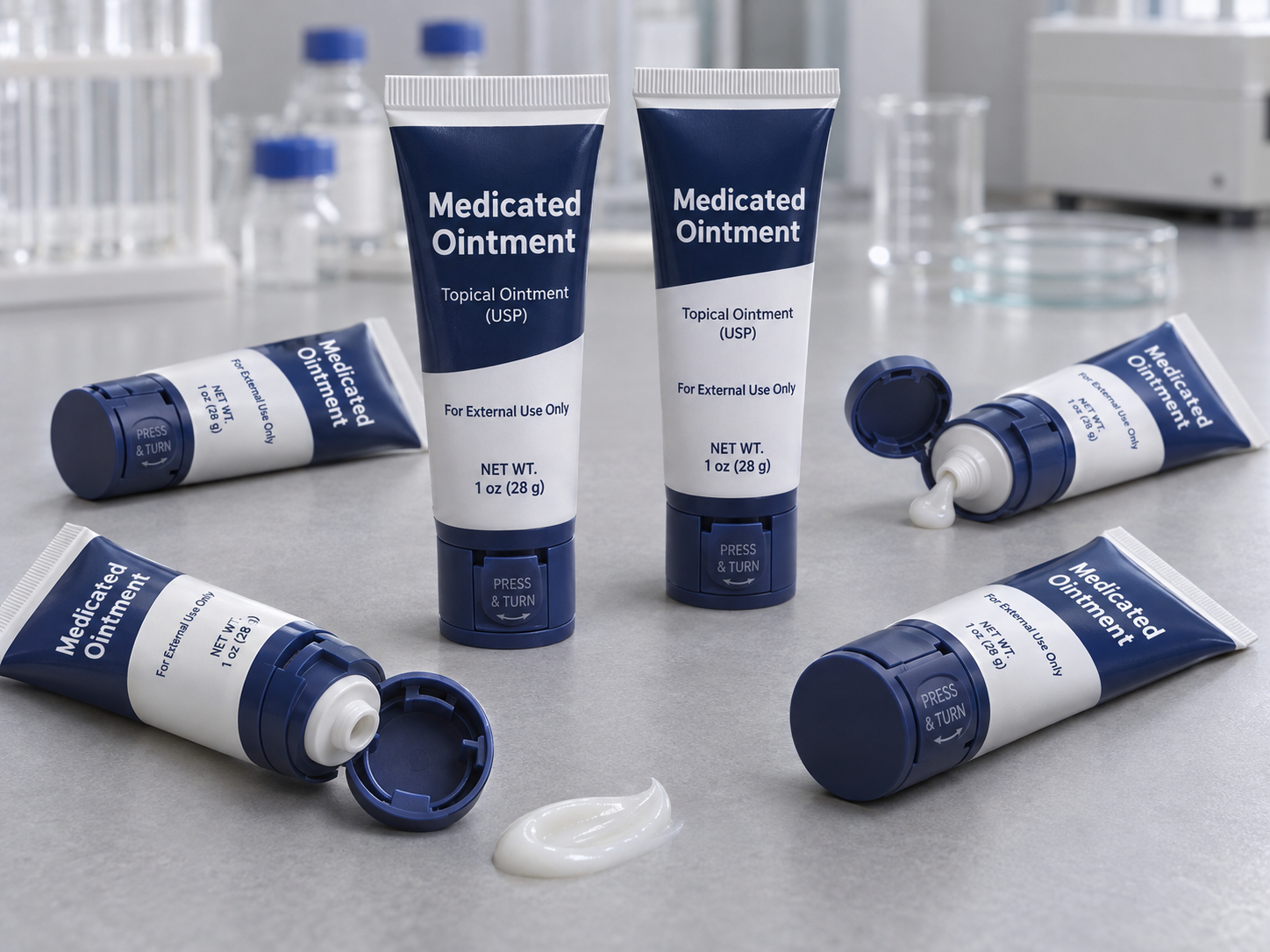
Can ABL tubes protect light-sensitive pharmaceutical creams? Yes. Their aluminum barrier layer can substantially limit light exposure, making aluminum barrier laminate (ABL) tubes a practical option for formulations vulnerable to photodegradation. The qualification is important, though: protection depends on the complete tube design, including the closure, and on the stability requirements of the formulation itself.
For a pharmaceutical brand, the decision is rarely just whether a tube looks opaque. It is whether the filled, sealed product can maintain its required quality through manufacturing, distribution, storage and normal use. The questions below address the packaging details that make that distinction meaningful.
How does an ABL tube protect a cream from light?
An ABL tube is made from a multilayer laminate that includes an aluminum foil barrier, typically combined with polymer layers. The foil is the principal light-blocking component in the tube wall. Unlike a transparent or lightly colored plastic wall, an intact aluminum layer is generally opaque and can prevent light from passing directly through it.
That matters because some active ingredients and other formulation components can change when exposed to particular wavelengths of light. Photodegradation may affect potency or contribute to changes in color, odor or other product characteristics. The response varies by formulation; a cream that is sensitive to ultraviolet light may not behave in the same way as one affected by visible light.
ABL construction can also provide a barrier to oxygen and moisture, both of which may be relevant to stability. These are separate packaging functions, however. Good light protection does not automatically prove that a tube offers the right oxygen or moisture protection for a particular cream.
Does the aluminum layer make the entire package lightproof?
No. The aluminum layer protects the area it covers, but a finished tube is more than its laminated body. The shoulder, nozzle, closure, seal and joins all deserve attention. If one component transmits light or creates an unintended exposure path, the overall package may provide less protection than the tube wall alone suggests.
A transparent cap, for example, is not necessarily a problem if an adequately opaque component beneath it blocks light from reaching the product. Conversely, an opaque-looking cap should not be assumed to provide sufficient protection without understanding the material and the assembled design. A nozzle opening, closure fit and any seal beneath the cap should be evaluated as a system.
Manufacturing quality is equally relevant. Laminate joins, tube forming and sealing need consistent control, because damage or defects can compromise the intended barrier. The useful question is not simply, “Does the laminate contain aluminum?” but, “Does the finished, filled package protect this formulation under its intended conditions?”
When is an ABL tube a strong candidate for a pharmaceutical cream?
ABL is worth considering when a formulation is known or suspected to be light-sensitive and the product also needs the convenience of a squeezable tube. It may be especially useful when a cream will be stored for extended periods, displayed under lighting or repeatedly handled after opening.
The format can also be attractive when the product needs more than light protection. A laminate structure with an aluminum layer may help limit exposure to oxygen and moisture, subject to the properties of the complete package. For a formulation affected by several environmental factors, that combination is worth discussing early in development.
Still, a tube is only one part of the product design. The intended shelf life, market climate, dispensing behavior, outer carton and patient instructions can all influence the packaging strategy. A cream supplied in an opaque carton, for instance, may receive additional protection during storage, but it will not be protected by that carton whenever the tube is left outside it.
How can you tell whether the protection is sufficient?
Start with what is known about the formulation, then test the intended commercial pack. A supplier’s material specification can help screen options, but it cannot replace stability evidence for the filled product.
- Establish the product’s light sensitivity. Review development data and identify relevant degradation products, potency limits and other quality attributes that may change with exposure.
- Define the presentation to be evaluated. Include the laminate structure, tube dimensions, shoulder, closure, seals and any outer carton. A change to one of these components may justify reassessment.
- Assess the finished package. Use appropriate photostability studies and stability testing to examine the product in its proposed container closure system. Where applicable, consider recognized guidance such as ICH Q1B and relevant regional regulatory expectations.
- Consider realistic use. Investigate whether repeated opening, dispensing and storage outside the carton could introduce exposure or other risks relevant to the product.
- Review results against acceptance criteria. Decisions should account for the formulation’s required quality throughout its proposed shelf life, rather than relying on the tube’s appearance alone.
Photostability study design and interpretation should be led by the pharmaceutical company’s qualified technical and regulatory teams. The precise tests depend on the product and the market; an ABL supplier can provide packaging information and samples, but should not be treated as the source of a blanket stability claim.
What should buyers check beyond the tube body?
A practical review begins with the areas most likely to be overlooked when comparing samples on a desk.
- Closure and shoulder materials: Ask whether the selected components are opaque at the wavelengths relevant to the product and how their performance is verified.
- Sealing arrangement: Understand the role of an induction seal or other opening seal, if used, before and after the patient first opens the tube.
- Laminate construction: Request the proposed layer structure and relevant barrier information. The inner contact layer matters for compatibility as well as manufacturing.
- Tube integrity: Review the suitability of the body seam, shoulder attachment and crimp seal for the filling process and intended handling.
- Supply consistency: Agree on specifications, quality checks and the process for communicating material or component changes.
These details are not interchangeable. A closure that works well on one tube configuration may need a fresh assessment on another. Similarly, a change to a laminate’s inner layer may have little to do with light transmission but could still affect the formulation’s compatibility with its container.
Are ABL tubes better than plastic tubes for light-sensitive creams?
They can be a strong choice, but “better” depends on the formulation and the complete packaging design. ABL uses an aluminum foil layer as its principal light barrier. Plastic barrier laminate and extrusion tubes rely on their selected polymers, barrier layers, pigments and overall construction to deliver the required performance. Some plastic tube designs may be suitable for light-sensitive products, but their performance should be established for the relevant wavelengths and finished pack.
ABL may also offer different oxygen and moisture barrier characteristics from an alternative plastic structure. Buyers should compare actual specifications and test results rather than assume that every tube in one category performs alike.
Other considerations include flexibility, dispensing feel, appearance, compatibility, manufacturing requirements and end-of-life options in the intended market. Multilayer materials can be challenging to recycle in some collection systems, so environmental claims should reflect the specific structure and local infrastructure rather than the tube category alone.
Can the cream react with the tube materials?
It can, which is why compatibility deserves attention alongside light protection. The formulation normally contacts the tube’s inner polymer layer rather than the aluminum foil. Even so, ingredients may interact with contact materials, and packaging components may contribute substances to the product under certain conditions.
Depending on the formulation and applicable requirements, evaluation may include assessments of sorption, changes in product properties, and extractables or leachables. The closure, nozzle and seal materials may also need consideration if they contact the cream or otherwise affect the container closure system.
This is particularly important when a cream contains solvents, oils or other ingredients that could influence material behavior. A laminate that blocks light effectively is not automatically compatible with every formulation.
What happens after the patient opens the tube?
Opening changes the conditions of use. An initial seal may no longer be present, and the product can be exposed at the nozzle during dispensing. How much that matters depends on the design, the formulation and the way the tube is used.
A well-designed closure can help limit unnecessary exposure between applications, but it should be evaluated in the intended configuration. Instructions such as replacing the cap promptly or storing the tube in its carton may support the packaging strategy when justified by product data. They should not be used to compensate for an unsuitable container.
In-use stability assessments can help determine whether the cream remains within its quality requirements during the proposed period after opening. Where relevant, the assessment should consider both light exposure and other factors introduced during use.
What information should a pharmaceutical brand share with a tube supplier?
A useful discussion starts with the product’s packaging requirements, not just a requested tube size. Share the target fill volume, viscosity or dispensing needs, filling and sealing process, proposed shelf life, storage conditions and any known light, oxygen or moisture sensitivities. If there are confidentiality concerns, a supplier can often begin with functional requirements before receiving detailed formulation information.
Ask for a proposed tube construction and component options, along with available technical documentation and sample arrangements. The brand’s development team can then assess those options against compatibility, stability and regulatory needs.
Shanghai Pactek Industries Co., Ltd. supplies laminate packaging solutions, including laminate tubes and related materials, and works with manufacturing partners across China. For a pharmaceutical cream project, that sourcing perspective can help buyers discuss tube structures and component options before selecting a configuration for their own testing and qualification.
Can ABL tubes protect light-sensitive pharmaceutical creams without an outer carton?
Possibly, but the answer must come from the product’s stability assessment. An appropriately designed ABL tube may provide substantial light protection on its own; a carton may provide an additional protective layer and can also affect labeling and distribution requirements. Whether it is necessary depends on the formulation, the complete tube and closure, anticipated exposure, and applicable regulatory expectations.
The soundest decision is therefore specific rather than categorical: choose the proposed package, test the filled product under appropriate conditions, and confirm that the resulting evidence supports the intended shelf life and use. ABL gives formulators a valuable barrier option, but the finished container closure system—and the cream inside it—ultimately determines the answer.
Can't find what you're looking for ?
Leave a Message we will call you back quickly!
Product Classification
Professional Service
Interested? Leave your contact details.
Search Starts Here