
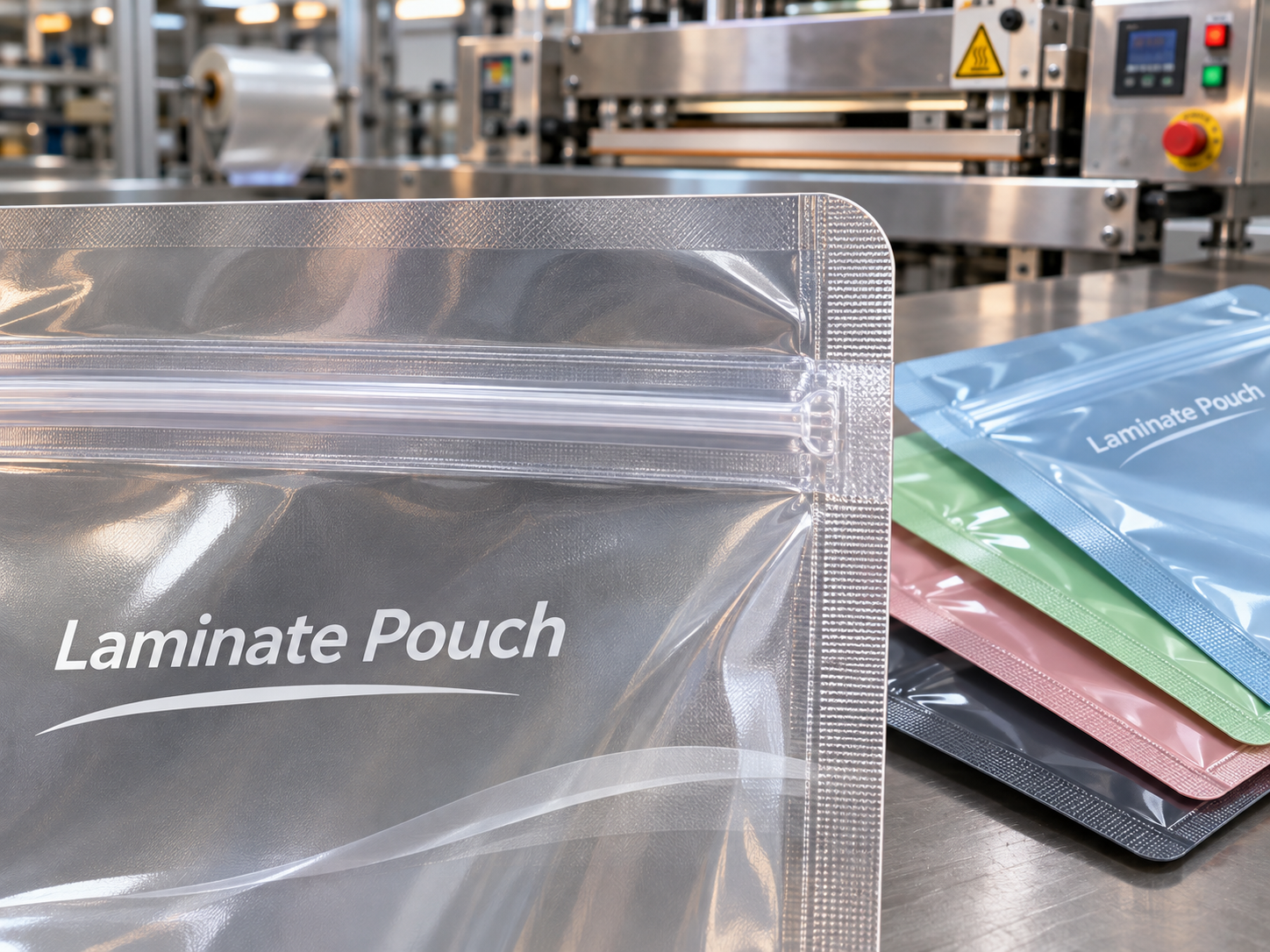
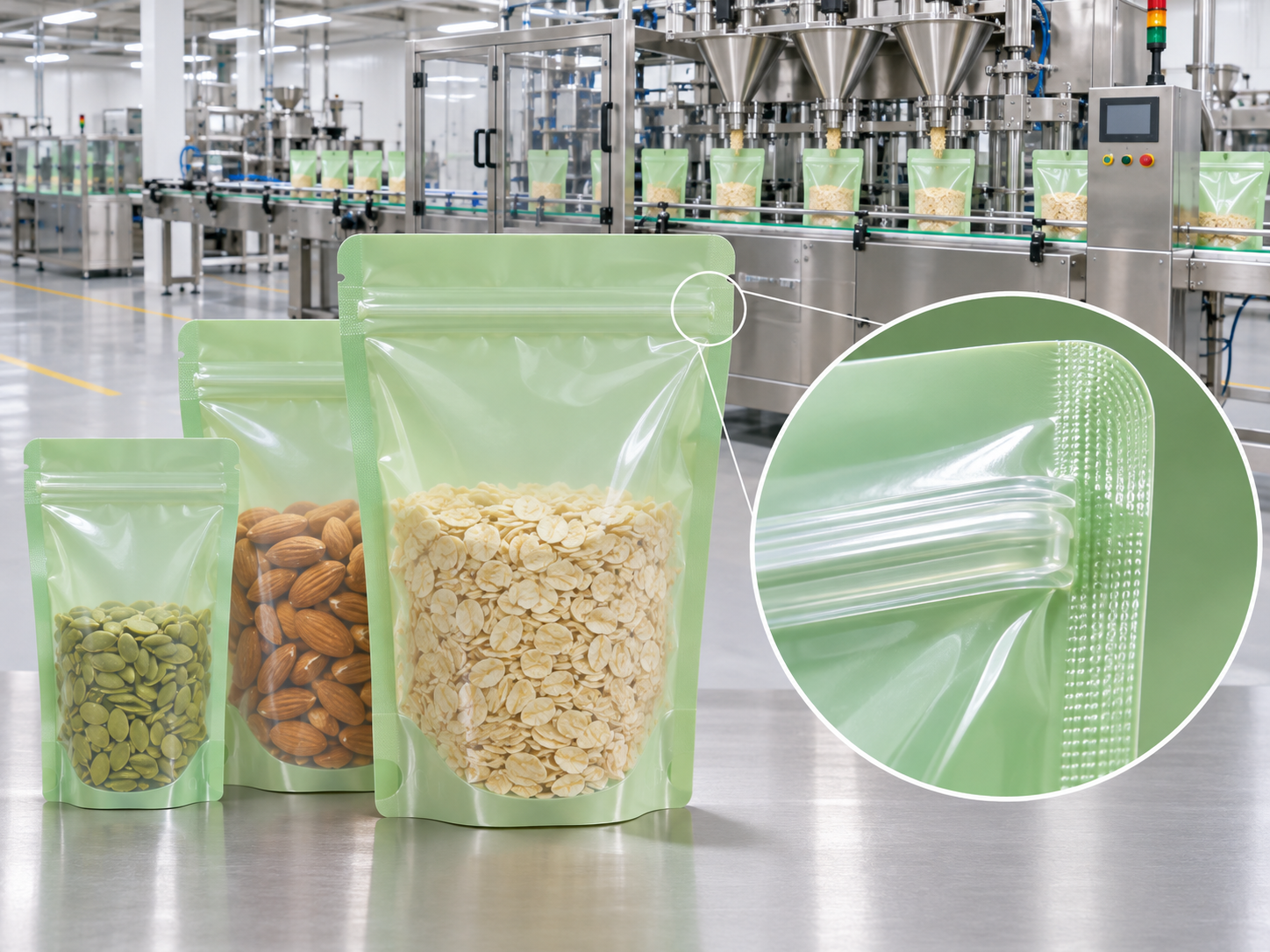
Even a small leak around a pouch zipper can compromise product protection and lead to costly complaints. The problem often starts at the heat seal.
If you are asking, “How do I prevent leaks around the zipper on a pouch?” begin by checking how the film bonds around the zipper profile.
Temperature, pressure, and dwell time work together with material compatibility and equipment condition. Reliable seals depend on controlling all of them across the zipper’s uneven geometry.
Where Do Zipper Pouches Usually Leak?
First, distinguish between a leak through the closed zipper and a leak through the surrounding permanent seals. They have different causes and may require different tests.
The zipper is a reclosable feature. Depending on the pouch design, a separate top seal provides the initial package closure and remains intact until opening.
Leaks often occur where the zipper crosses a side seal. At this junction, the seal must bridge changes in thickness and fill small gaps around the profile.
Other vulnerable areas include the zipper ends, the attachment between the zipper flange and pouch film, and wrinkles or contamination trapped in the seal.
Start troubleshooting by locating the leak on actual filled pouches. Record whether it occurs before opening, after resealing, or during both stages of use.
This distinction prevents teams from increasing heat when the real issue is a misaligned zipper, a damaged profile, or product caught between the sealing surfaces.
How Does Sealing Temperature Affect Leakage?
Heat must soften the pouch’s sealant layer and compatible zipper surfaces enough to form a continuous bond. Insufficient heat can leave channels or weak attachment points.
The temperature displayed on the machine is a starting reference. Actual heat reaching the materials also depends on jaw contact, material thickness, line speed, and equipment condition.
Too little heat may produce a seal that appears closed but separates easily, especially where the zipper creates extra layers or interrupts contact between films.
Too much heat can distort the zipper profile, shrink the film, squeeze molten sealant away, or damage adjacent layers. These defects can create new leak paths.
Check the equipment manufacturer’s method for measuring jaw temperature, and verify readings across the sealing area. A cold spot near a zipper end may explain recurring failures.
Set a temperature range through trials with the actual pouch construction and zipper. A setting that works for one laminate may fail with another sealant layer.
Watch for a stable operating window rather than one successful sample. Production variation in film, equipment, and speed must fit within that window.
What Role Do Pressure and Dwell Time Play?
Pressure brings softened surfaces together and helps the seal conform around the zipper profile. Inadequate or uneven pressure can leave narrow channels beside thicker areas.
Excessive pressure is also a concern. It can thin the sealant, distort the zipper, damage the laminate, or prevent the sealing jaws from contacting adjacent areas evenly.
Check jaw alignment and condition before changing pressure. Worn surfaces, damaged cushioning, or an unsuitable jaw design can concentrate force in the wrong places.
Dwell time is the period during which the sealing surfaces remain in contact under the selected conditions. The required time depends on the equipment and materials.
A short dwell may not transfer enough heat through thicker zipper intersections. A longer dwell can help, but excessive exposure may deform the zipper or reduce output.
On continuous equipment, dwell is often influenced by speed and sealing geometry. Increasing line speed without reviewing heat transfer can turn a previously reliable seal into a leak.
For practical trials, change one setting at a time initially, then confirm promising combinations together. Temperature, pressure, and dwell interact, so none should be judged in isolation.
Why Are Zipper Ends and Side Seals So Difficult?
At the side seal, flat pouch layers must bond around a raised zipper profile. That uneven stack can prevent full contact and leave a path to the outside.
Some pouch designs use zipper end crushing or other profile termination features to reduce the step in thickness. Their suitability depends on the zipper and pouch construction.
Crushing conditions need their own validation. Too little deformation may leave a channel; too much can damage the zipper or weaken nearby film.
Jaw shape, pressure distribution, and any compliant sealing surface should be matched to the profile. Ask the equipment or zipper supplier which configurations support your construction.
Inspect both ends of the pouch separately. A consistent leak on one side may point to jaw alignment, uneven heating, or variation in zipper placement.
Also check the zipper flange seal along its length. If the flange is poorly bonded to the film, a good side seal alone may not protect the package.
Are the Pouch Film and Zipper Compatible?
Sealing settings cannot reliably compensate for incompatible materials. The pouch’s inner sealant layer must bond to the zipper flange under conditions that the whole structure can tolerate.
Review the sealant resin, zipper material, film thickness, and supplier specifications together. Request evidence that the proposed combination has been tested for the intended application.
Consider the entire laminate, not just the inner layer. High sealing temperatures may affect printed layers, adhesives, barrier performance, or appearance, depending on the structure.
Product contact also matters. Powder, oil, moisture, and other residues can interfere with bonding, while some products place additional demands on seal integrity during storage.
If the application requires food or pharmaceutical packaging, confirm material suitability and applicable requirements with qualified suppliers. Validate performance against the actual product and distribution conditions.
When changing film suppliers, zipper profiles, or laminate structures, repeat the sealing trials. Similar descriptions do not guarantee an identical operating window or leakage performance.
How Can You Find the Cause of a Leak?
Use a controlled troubleshooting sequence so that adjustments produce useful evidence. Start with representative production samples and document the pouch, product, equipment, and operating conditions.
Inspect the zipper area under good lighting. Look for wrinkles, incomplete flange bonds, profile distortion, uneven side seals, and visible product contamination in the seal area.
Mark the leak location using a test suitable for the pouch and product. Dye penetration, vacuum-based methods, or other validated techniques may help identify different defects.
No single test reveals every failure. Select methods with the supplier or quality team, and confirm that test sensitivity matches the leak risk for the application.
Measure seal strength where appropriate, including areas near the zipper. A strong seal reading at a flat section does not prove that the zipper intersection is leak-free.
Compare good and failed samples from the same run. Record whether failures cluster by pouch position, production time, zipper end, material roll, or machine lane.
Verify jaw temperature, alignment, pressure settings, and timing against the machine’s maintenance and calibration procedures. Check for worn components before making large process changes.
Then run a planned set of trials across a safe range of temperatures, pressures, and dwell times. Include normal production speed and expected material variation.
Test enough samples to support the decision, including filled pouches where relevant. Agree on sample size, acceptance criteria, and test methods before selecting settings.
Finally, confirm that the chosen settings consistently meet seal integrity, appearance, and zipper function requirements. Record the approved range and the conditions under which it applies.
What Should You Do When Common Adjustments Do Not Work?
If increasing temperature improves some seals but damages the zipper, the process may have a narrow operating window. Review material compatibility, jaw design, and heat distribution.
If the leak appears only at zipper ends, investigate profile termination and local pressure before changing settings across the whole pouch. The problem may be geometric.
If defects increase at higher speeds, examine effective dwell and heat transfer. Confirm that the machine can maintain consistent sealing conditions at the target output.
If failures occur after filling, inspect product deposits and pouch handling before sealing. A clean, well-formed seal area is essential for a dependable bond.
If the pouch leaks only after consumers open and reclose it, check zipper engagement, profile damage, and use conditions. The original top seal may no longer be relevant.
For persistent failures, share marked samples and process records with the pouch, zipper, and equipment suppliers. Joint review can reveal an interaction that individual checks miss.
How Can Packaging Teams Reduce Leakage in Production?
Translate trial results into operating limits that operators can check. Include approved material combinations, equipment settings, inspection points, and a clear response to out-of-range conditions.
Inspect incoming film and zippers for damage and variation. Track material lots so recurring leaks can be linked to a specific roll, shipment, or production period.
Maintain sealing jaws and verify machine settings on a defined schedule. Record adjustments and investigate repeated drift rather than relying on frequent informal corrections.
Use routine checks that reflect the actual failure risk, including inspection of zipper ends and relevant leak testing. Increase sampling after changes or unexplained failures.
Evaluate changes in output, scrap, complaints, and seal performance together. A faster line is valuable only when the resulting pouch consistently protects its contents.
For new projects, involve material and equipment suppliers early. Shanghai Pactek Industries can help buyers source laminate films and pouches suited to their packaging requirements.
Conclusion
Preventing zipper-area leaks starts with finding the leak path, then controlling heat, pressure, and dwell across a compatible pouch and zipper construction.
Pay particular attention to zipper ends and side-seal intersections. Validate settings on representative filled pouches, monitor production, and revisit the process whenever materials or equipment change.
Can't find what you're looking for ?
Leave a Message we will call you back quickly!
Product Classification
Professional Service
Interested? Leave your contact details.
Search Starts Here