
‹
›
OEM Service Process
Complete the cooperation in four simple steps, with a professional team providing full support throughout the process.
Confirmation of product type, specifications, quantity, and special requirements
Provide a complete solution and detailed quotation
Make samples and adjust them to satisfaction
Mass production delivery based on confirmed samples
4ml ABL Precision Nozzle Tube for 2K Adhesives & Catalysts Product Detail
Industrial adhesives and dental composites rely on precise chemical reactions. A single trace of environmental moisture or premature contact between the catalyst and the base resin can ruin the entire batch before it even reaches the end-user. Our 4ml ABL (Aluminium Barrier Laminate) precision nozzle tube is not just a container — it is a functional barrier system engineered to guarantee formulation stability, ensure zero cross-contamination, and deliver pinpoint accuracy for reactive two-component (2K) systems.
4ml ABL Precision Nozzle Tube for 2K Adhesives & Catalysts Features
Ultimate Barrier Protection for High-Reactivity Formulas
Standard PE or PBL tubes cannot block environmental moisture and oxygen over a long shelf life. This tube incorporates a 12–40 µm aluminium foil layer, delivering an OTR below 0.5 cc/m²/day and WVTR below 0.2 g/m²/day. For moisture-sensitive catalysts, cyanoacrylates, and epoxy hardeners, this absolute barrier is the difference between a long-lasting product and a solidified tube of waste.
Dual-Component Separation & Precision Dispensing
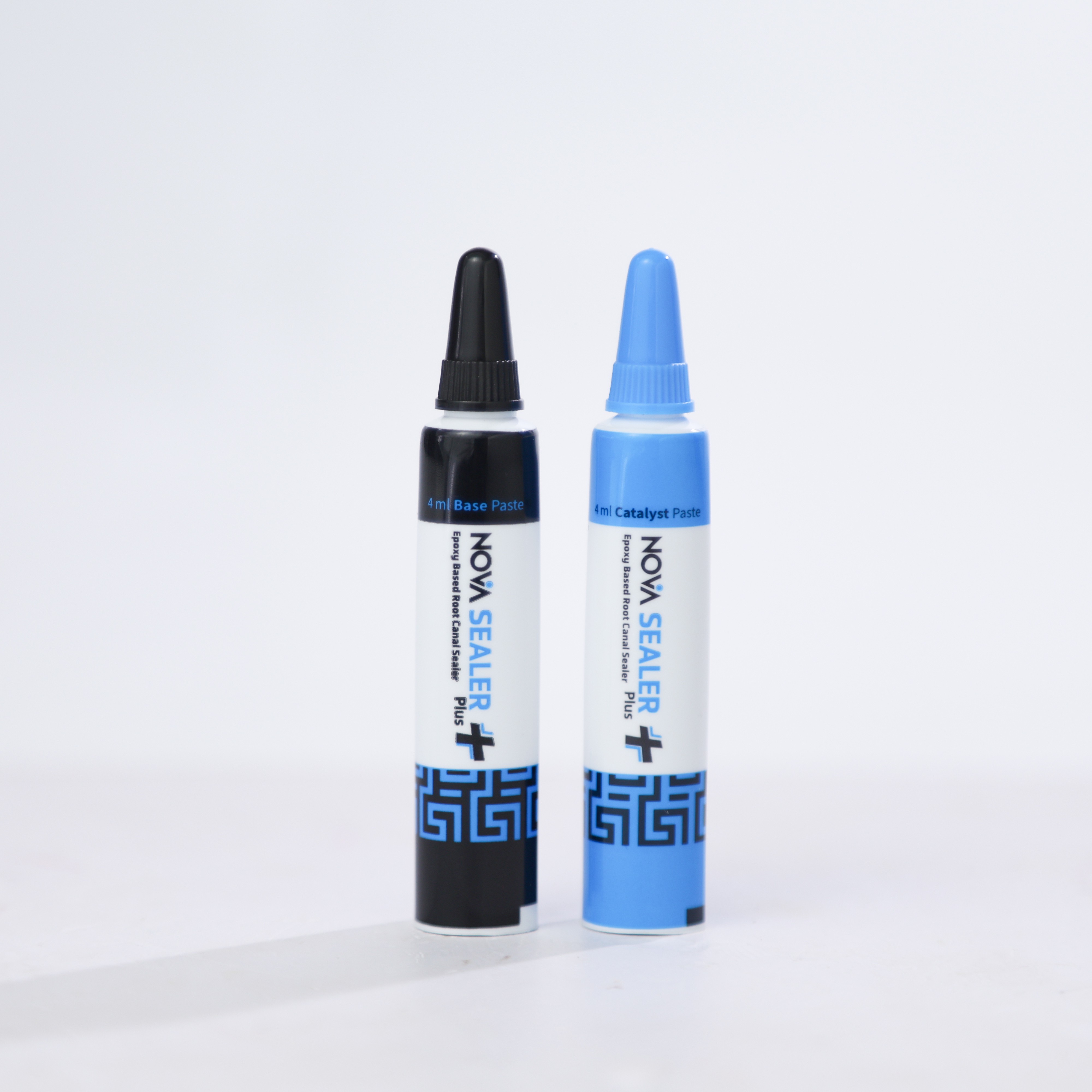
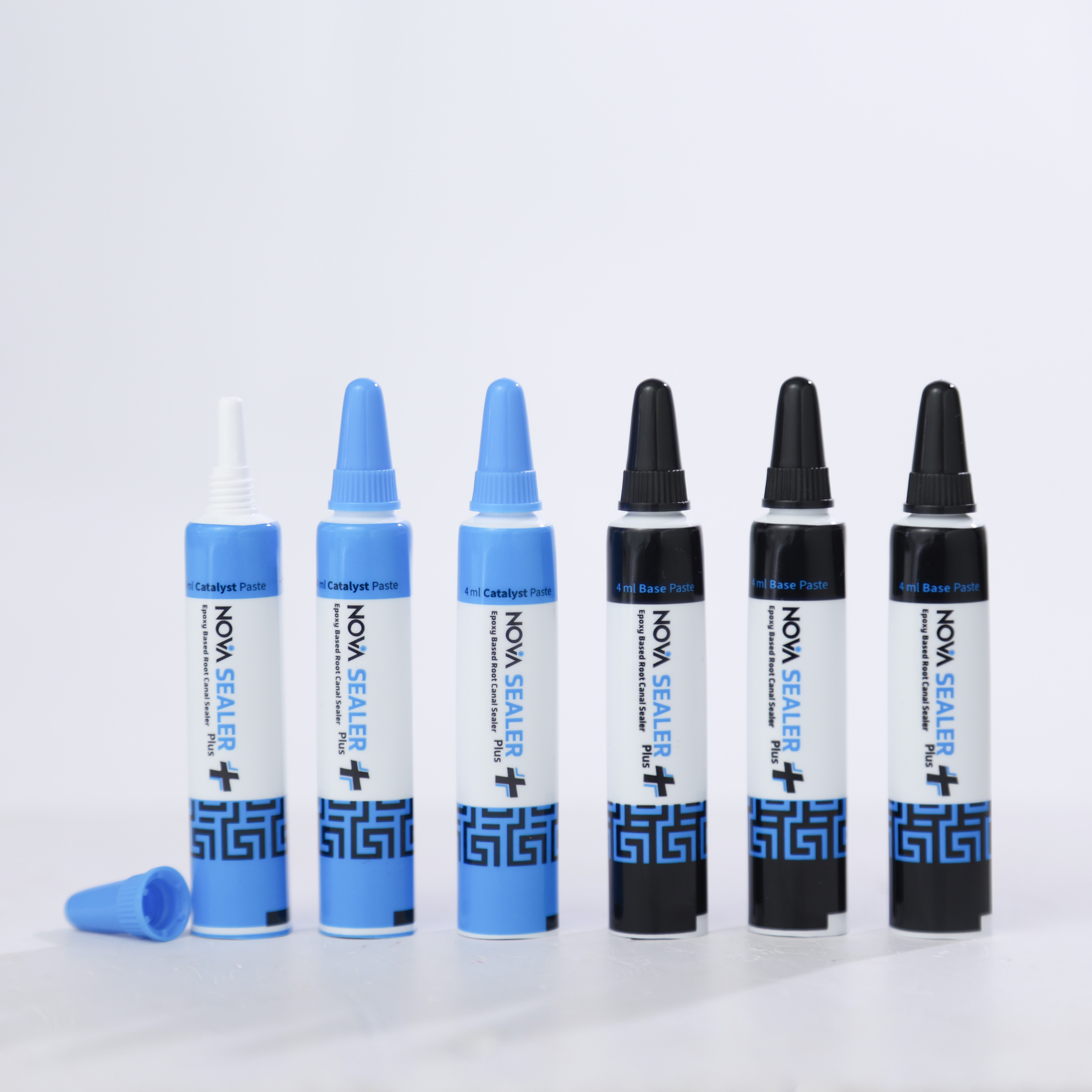
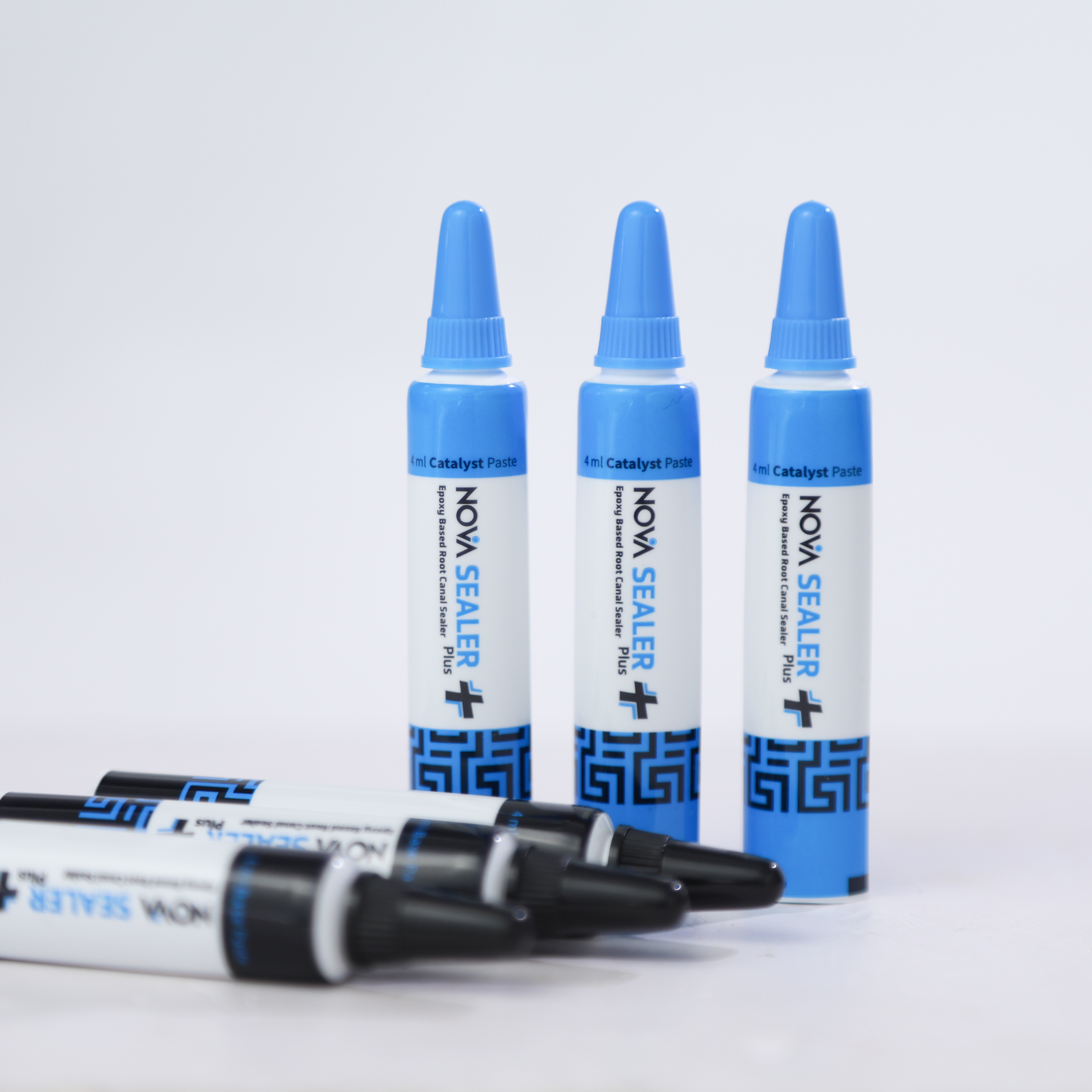
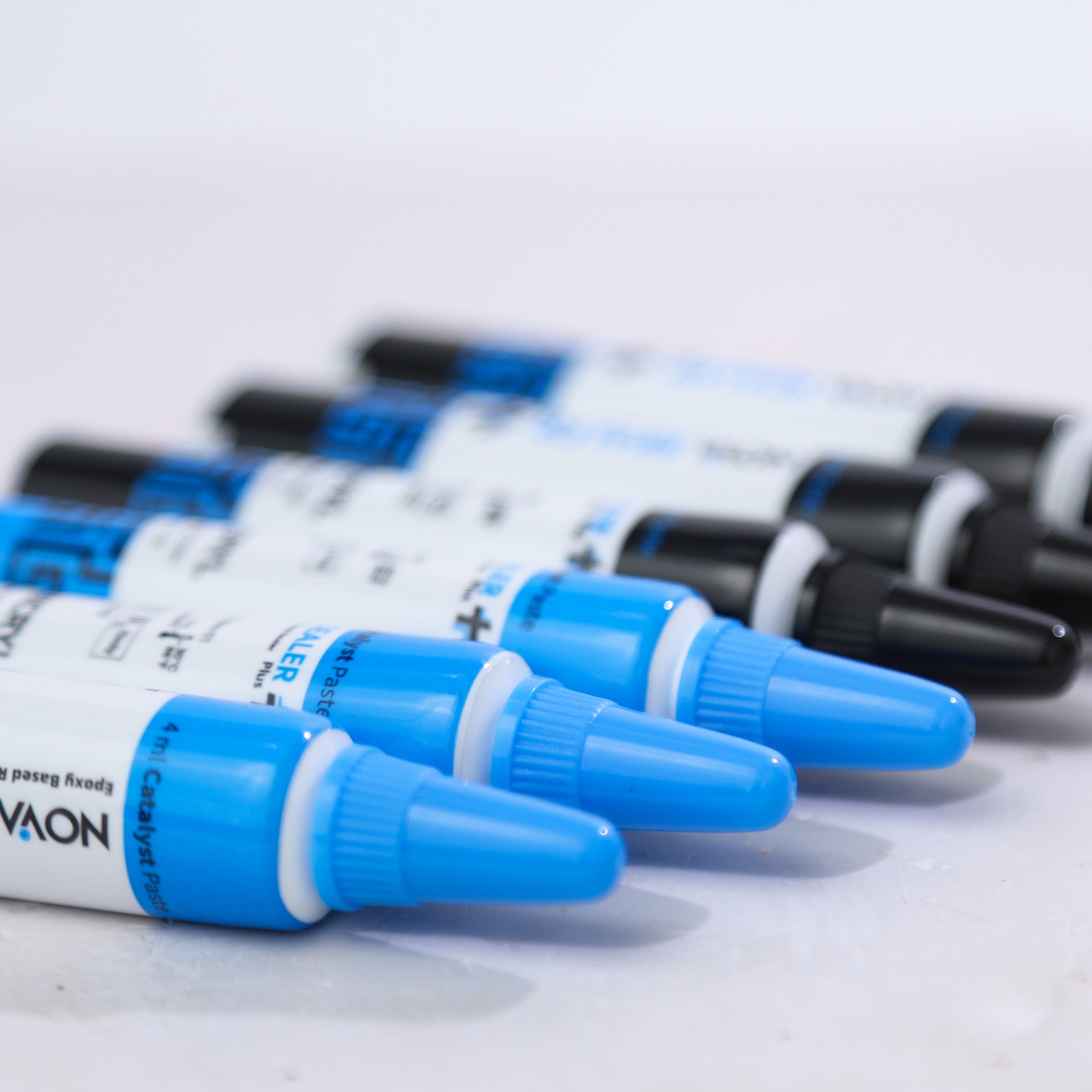
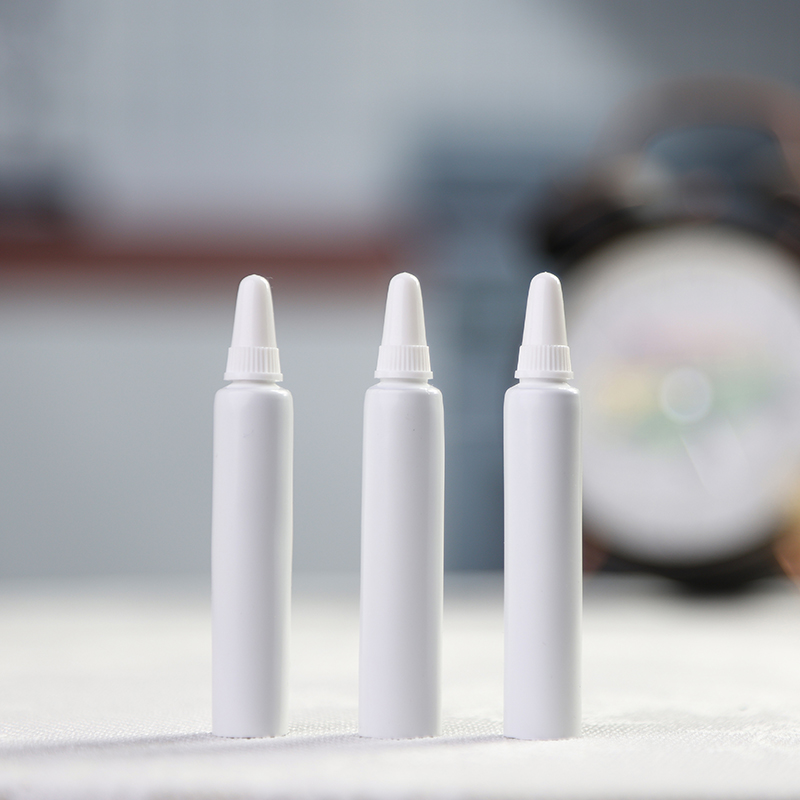
Supplied in matched catalyst and base-paste configurations (as shown in the blue and black dual-color design), the components are physically isolated until application. The extended, restricted-channel nozzle provides drop-by-drop precision, ideal for applying structural epoxies or dental impression materials exactly where needed. We support synchronized batch numbering across both tubes to maintain strict traceability.
Regulatory Compliance: Hazard Warnings & Braille Embossing
For chemical and medical packaging, compliance is non-negotiable. Our 4ml ABL tubes support high-resolution offset printing for GHS hazard warnings alongside embossed braille. Because a 4ml tube has limited surface area, we utilize precision micro-embossing to ensure the braille meets EU accessibility directives without compromising the legibility of the safety warnings. We also offer compliant alternative formats (such as supplementary tab labels) for ultra-small volumes.
4ml ABL Precision Nozzle Tube for 2K Adhesives & Catalysts Applications
Applications
2K Adhesives & Epoxies: Ideal for structural adhesives, acrylics, and polyurethane glues where A/B components must remain strictly separated until mixing.
Dental Materials: Perfect for precision dispensing of dental impression materials, bonding agents, and temporary cements.
Automotive & Industrial Sealants: Small-volume dispensing of thread lockers, gasket makers, and liquid metal compounds.
Chemical Catalysts: Safe storage and pinpoint application of reactive hardeners and accelerators.
Specifications
Material: ABL (Aluminium Barrier Laminate) with PE inner contact layer
Capacity: 4 ml (custom sizes available)
Nozzle: Extended precision nozzle (custom tip geometry available)
Printing: Up to 9-colour offset; precision braille micro-embossing
Compatibility: Fills and seals on standard tube filling lines (requires deep-insertion nozzle dosing)
Why Partner With Us?
We understand that packaging performance is validated at the filling line, not just on a spec sheet. That is why we provide standardized FOB quotes based on your order tier (starting from 10,000 pcs), making it easy for procurement teams to compare landed costs fairly. Our standard lead times are 7 days for samples and 15 days for bulk production. To guarantee your exact formulation performs as expected, we strongly encourage you to request a pre-production sample filled with your actual catalyst to verify tail-seal integrity and compatibility before mass production.
products faq
Leakage during dispensing on a long nozzle tube is rarely a nozzle defect — it is almost always a sealing or filling issue that can be traced in three steps. First, inspect the tail seal area for residual product. Even a microscopic smear of paste in the sealing zone prevents a proper weld, causing the tube to burst at the tail under squeezing pressure. Second, check the shoulder-to-nozzle joint. If the tube was over-torqued during cap application, the shoulder can develop hairline cracks. Third, verify the filling line's nozzle depth. The dispensing head must insert deep enough into the elongated neck; if it stops too early, product accumulates in the nozzle channel and fouls the cap seal.
If the leakage appears after 24–48 hours of filling, it points to a formulation-to-PE compatibility issue rather than mechanical failure. In that case, an internal lacquer upgrade may be required.
To compare quotes fairly, insist on FOB (Free On Board) terms from every supplier first. EXW quotes exclude inland freight and export clearance, while CIF quotes bundle in shipping and insurance, making the unit price look misleadingly high or low. Once all quotes are converted to FOB at the same volume tier (e.g., 10,000 pcs), you can see the actual manufacturing cost.
For long nozzle ABL tubes, bulk pricing is driven by three factors: tube structure (barrier level required), decoration (number of offset colours and braille embossing), and nozzle tooling (standard tip vs. custom mould). An FOB quote at 10,000 units should clearly itemise the tube body, cap, and any mould fee. If a supplier’s bulk price seems too low, check whether they excluded the mould cost or quoted a thinner wall thickness than your formula requires.
Yes. The 4ml tubes are filled and supplied as separate physical units — a catalyst tube and a base tube, often colour-coded (e.g., blue and black) for easy identification on the assembly line or at the point of use. The barrier separation is structural, not chemical: the components never share the same tube cavity until the end-user dispenses them together.
To maintain this separation during logistics and use, two details matter. First, the tail seal integrity must be verified at the 4ml fill weight, because a compromised weld allows cross-contamination. Second, the nozzle caps must be fully seated to prevent micro-leakage between paired tubes. If you are bundling the two tubes for retail or industrial kits, we can supply them in matched pairs with synchronized batch numbers, ensuring both the catalyst and base paste carry the same production and expiry traceability.
Yes, provided the ABL construction is correctly specified for the formula. The 12–40 µm aluminium foil layer delivers OTR below 0.5 cc/m²/day and WVTR below 0.2 g/m²/day, which blocks the moisture and oxygen ingress that trigger premature curing in moisture-sensitive hardeners and catalysts. The inner PE contact layer handles direct chemical contact with the paste; for acidic or solvent-heavy catalysts, an internal lacquer upgrade should be specified rather than relying on PE alone. Two practical checks before production: request a filled-tube aging test at elevated temperature with your actual catalyst formulation, and confirm the tail seal integrity on the 4ml fill weight, because small-volume fills concentrate seal stress at the shoulder and tail weld.
Related Products
 Child Resistant Aluminum Barrier Laminate Flexible Tube
 ABL Tube‑The Proper Aluminum Laminate Packaging Solution for Pharmaceutical
 ABL-Aluminum Barrier Laminate Tube with Flip Top for Toothpaste
 HAL Holographic Laminate Toothpaste Tube with Full‑Surface Printing
 Custom Cap ABL Laminated Cosmetic Tube
 Soft Laminate ABL Tube with Octagonal Cap for Hand Cream
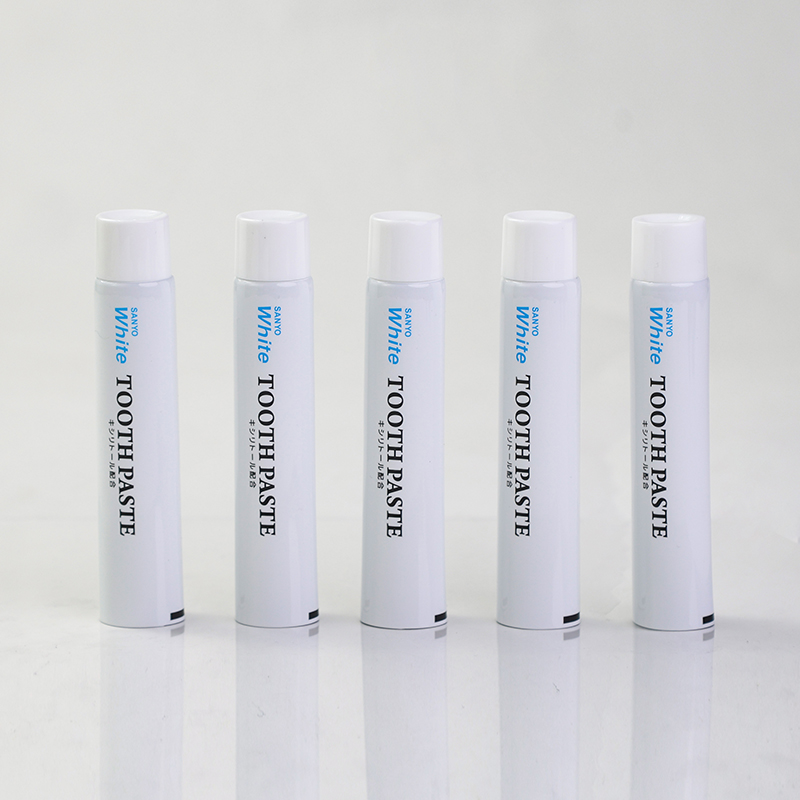
 ABL Laminate Tube for toothpaste and pharmaceutical
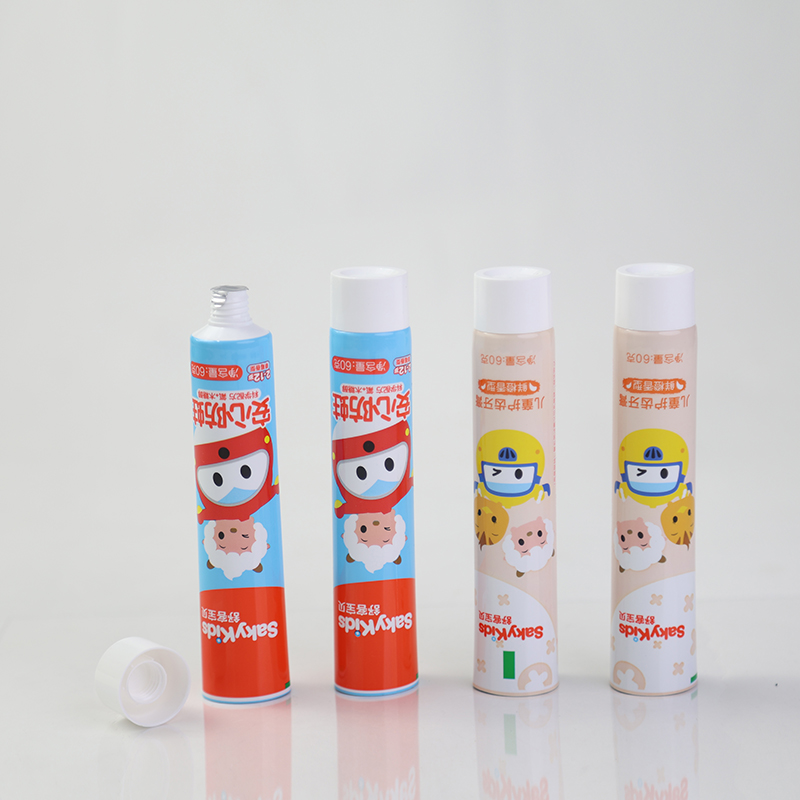
—22mm-Diameter") Laminated Tube (Children's Toothpaste Tube)—22mm-Diameter
 ABL250/12 White Laminate Tube with Full-Diameter Screw Cap for Kids Toothpaste
 Alumi-Plastic Laminate Tube with Screw Cap and Offset-Printed Decoration for Travel-Size Toothpaste
 4ml ABL Precision Nozzle Tube for 2K Adhesives & Catalysts
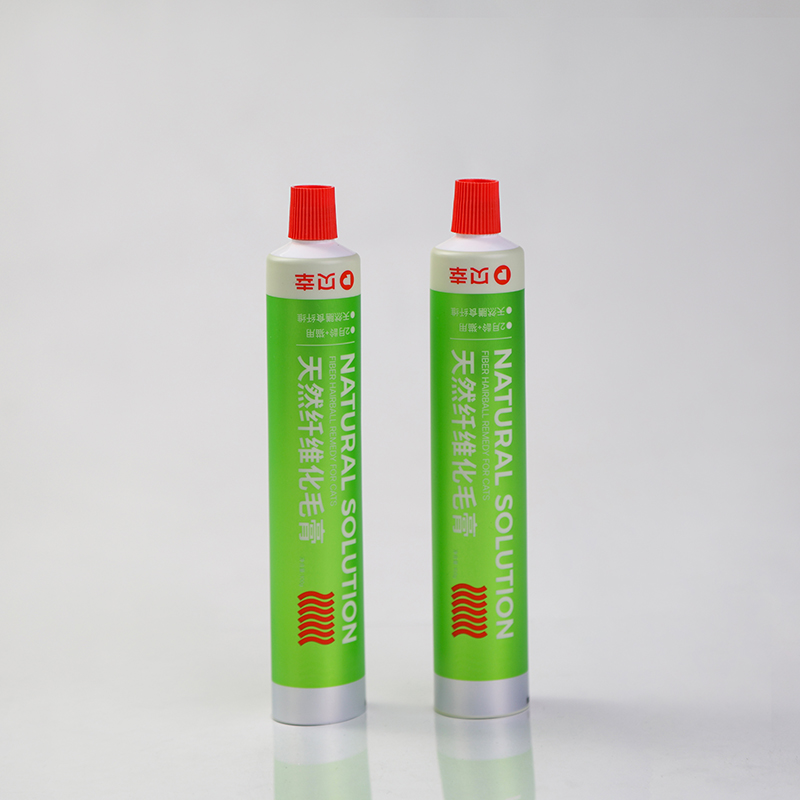
 Premium Multi-Layer Laminated Tubes for Pet Hairball Remedies & Functional Gels
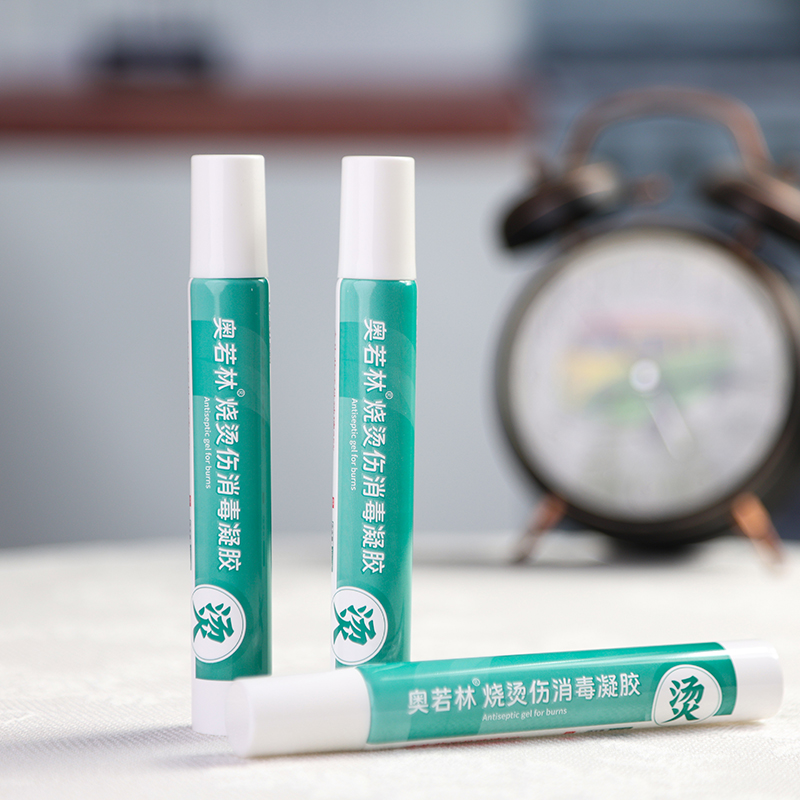
 Pharmaceutical & Medicated Gel Laminated Tubes
 Aluminum Plastic Laminate Tube With Twist-Off Nozzle Tip
 Mini & Travel-Size Composite Tubes
Professional Service
Interested? Leave your contact details.
Search Starts Here