
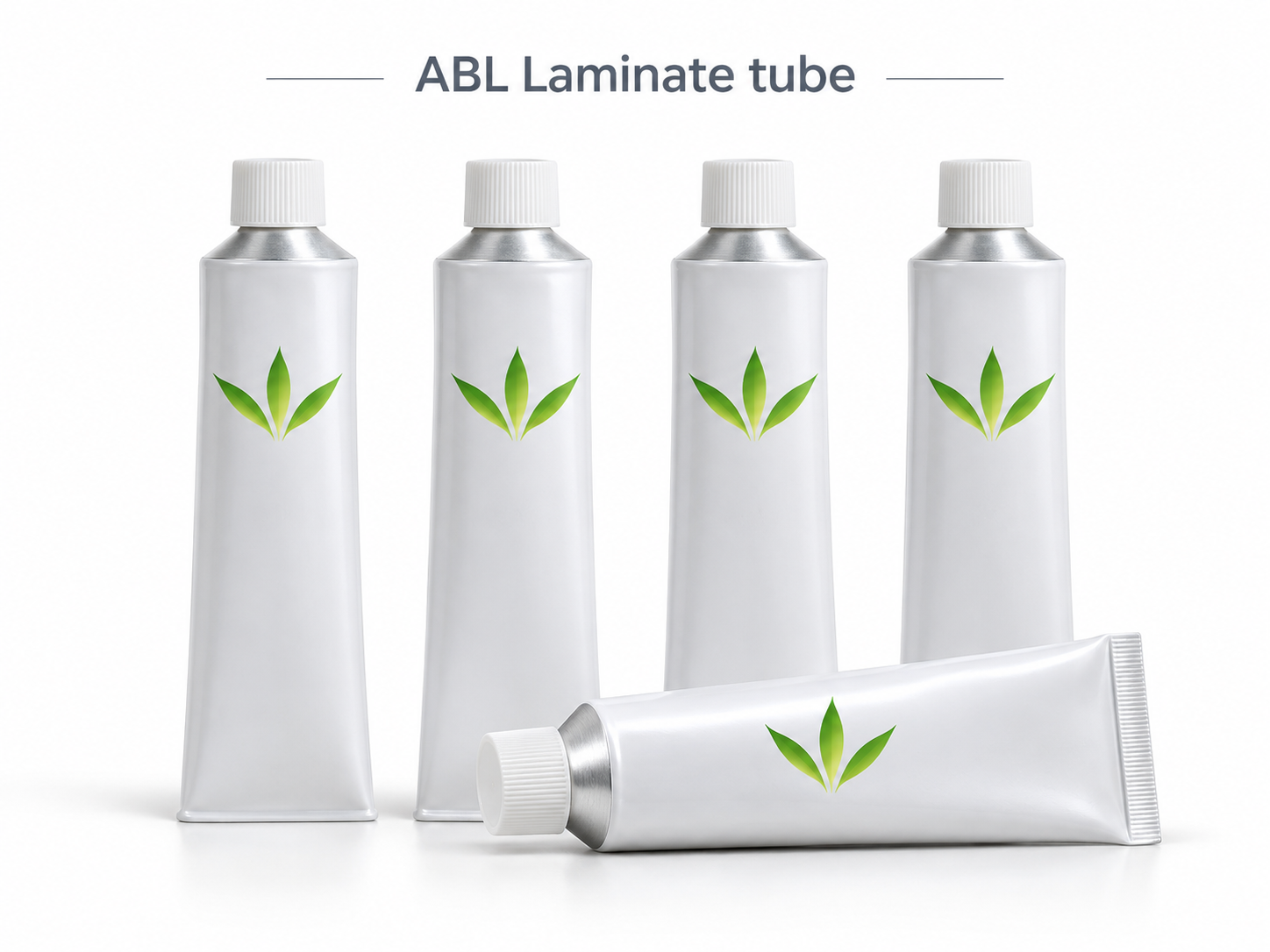
Planning a bulk order for aluminum barrier laminate (ABL) tubes involves more than choosing a delivery date. Production timelines can vary depending on order quantity, artwork approval, material availability, and customization requirements. Buyers also need to consider how the custom ABL tube MOQ may affect scheduling and procurement costs. This guide explains the key stages of the ordering process and the factors that influence lead times, helping you plan ahead and secure packaging for your product launch or replenishment.
The short answer: plan around the whole order, not just production
A repeat order using approved artwork, available materials, and an existing tube specification will generally move faster than a first-time custom project. A new order may require structural decisions, artwork preparation, sampling, and filling-line checks before the supplier can commit it to production.
There is no single lead time that reliably covers both situations. As a preliminary planning assumption, a straightforward repeat order may take several weeks to produce, while a new custom project can take longer if samples, special components, or revisions are needed. These are not delivery promises: ask for a project-specific schedule before setting a launch date.
It is equally important to agree on what the quoted lead time means. Does it start when the purchase order is submitted, when payment terms are satisfied, or only after artwork and specifications are approved? Does it end when the tubes are ready at the factory or when they arrive at your filling site? Those distinctions can change the usable answer considerably.
Where the time goes in an ABL tube order
An ABL tube is made from a laminate structure that includes an aluminum barrier layer. It is used for products where the package must help protect the contents from external influences such as moisture, oxygen, or light. The exact protection depends on the complete structure and finished package, not simply on the presence of aluminum.
From a scheduling perspective, the tube is an assembly of decisions: laminate, printing, diameter, length, shoulder, opening, and cap. Each decision can affect the others. A change to the cap, for example, may require a different shoulder or packing arrangement rather than a simple substitution.
Specification and quotation
A useful enquiry gives the supplier enough detail to check feasibility and availability. Along with order quantity and destination, provide the intended fill volume, product type, tube dimensions if known, closure preference, printing requirements, and expected filling method. If the tube will run on an automated line, share the machine requirements and any existing component drawings.
Nominal fill volume alone is not enough to define a tube. Product density, desired headspace, sealing requirements, and filling behavior can all affect the dimensions that work in practice. Agreeing on the dimensions early reduces the risk of finding out late that an attractive sample does not suit the filling line.
Artwork, proofs, and samples
Artwork preparation can involve more than placing a logo on a template. The supplier needs the correct dieline and print-ready files, including the position of the seam, registration marks where required, color references, and any text or code areas. The buyer remains responsible for checking that claims, ingredients, language, and other content meet the requirements applicable to the product and market.
Clarify what each proof or sample is intended to confirm. A digital proof is useful for layout and text, but it does not necessarily show the final appearance of ink on the selected laminate. A physical sample may help assess color, shape, and handling; a production-representative sample is more useful for filling-line or compatibility work. Not every sample is made with the final materials and process, so ask before treating it as final approval.
Build time into the schedule for internal review. Marketing, quality, regulatory, and operations teams may all need to sign off. One consolidated set of comments is usually easier to manage than several rounds of conflicting changes.
Material procurement and manufacturing
Once specifications and artwork are approved, the supplier can confirm the availability of laminate and components and reserve production capacity. Depending on the project, some purchasing or preparation may be possible earlier, but buyers should not assume that a production slot is secured before approval.
Manufacturing typically involves printing and forming the laminate into tube bodies, attaching the shoulder and closure as specified, and carrying out agreed inspections. The exact process and sequence depend on the tube design and manufacturer. Ask which checks are included, what acceptance criteria apply, and when inspection results or shipment documents will be available.
How the custom ABL tube MOQ affects timing
The minimum order quantity is not necessarily one number for the entire project. It may be influenced by the laminate structure, printed artwork, tube diameter, shoulder, cap, and production setup. A supplier may quote one minimum for a standard configuration and another for a special finish or component.
This matters when a buyer has several product variants. An order that looks large in total may be split across multiple designs, languages, sizes, or cap colors. Ask whether the minimum applies per artwork, per size, per component, or to the combined order. Also ask whether unused printed material can be retained for a later run, who owns it, how long it can be stored, and whether storage or disposal charges apply.
Ordering more is not automatically the fastest option. A larger run may justify a production setup, but it can also require more material, more capacity, and longer manufacturing time. Conversely, a small order may fit into a schedule only if it uses readily available materials and components. The practical question is not just “What is the MOQ?” but “What configuration can be produced by the date we need?”
For a launch with uncertain demand, compare the cost of a larger custom run with the inventory risk. A standard cap or existing tube format may offer a workable compromise, provided it meets the product and filling requirements. Do not accept a lower minimum at the expense of an untested change to the package.
Why apparently simple orders get delayed
The most disruptive delays often occur at handoffs. A design is approved but the cap specification is still open. A sample is accepted visually, but the filling team has not checked whether it seals consistently. A delivery date is discussed, but nobody has confirmed whether it refers to factory dispatch or arrival at the warehouse.
Compatibility deserves particular attention. The product formulation, laminate contact layer, closure, and intended storage conditions should be assessed together. Depending on the application, the buyer may need to arrange appropriate compatibility, shelf-life, or filling trials. A tube that looks correct is not proof that it will perform with a particular formulation over its intended life.
For food, pharmaceutical, and cosmetic applications, identify documentation needs before ordering. Requirements depend on the product, the market, and the part of the package in contact with the contents. Request the relevant material declarations and supporting documents for review rather than assuming that a general statement about suitability covers the full application.
Changes after approval can also have uneven consequences. A corrected text file may be manageable before print preparation is complete; the same correction after materials have been printed could require rework or replacement. Ask the supplier to identify the last practical approval point and the likely consequences of changes after it.
Factory completion is not the same as delivery
A delivery plan should include packing, collection, transport, customs clearance where applicable, and receipt at the filling site. Transit varies with route, mode, carrier availability, and documentation. Air freight may reduce transit time compared with sea freight on some routes, but it does not remove production delays and can materially change landed cost.
Confirm the agreed delivery terms and responsibilities: who books freight, who prepares export and import documents, who pays duties and local charges, and where risk transfers. If delivery is time-critical, ask when carton counts, weights, and shipment details will be confirmed so the logistics provider can plan collection.
Tubes also need packaging suited to transport and subsequent handling. Discuss carton configuration, protection against deformation or contamination, palletization if needed, and storage conditions. A shipment that arrives on time but cannot be used on the filling line is not a successful delivery.
Build a schedule that allows decisions to be made early
Work backward from the date the filling site needs usable tubes, not from the retail launch. Allow for incoming inspection and any trial or line setup before the planned filling run. Then add transport, production, and approval stages, with contingency for the items that are not yet confirmed.
Ask the supplier for milestones rather than a single duration: specification sign-off, artwork approval, sample approval if required, material readiness, production completion, inspection, and dispatch. Identify which activities can overlap and which cannot. This makes a late decision visible while there is still an opportunity to adjust the plan.
For replenishment, preserve the approved specification and record the previous order’s artwork version, components, and inspection requirements. A repeat purchase is easier to schedule when both parties can identify exactly what is being repeated. Check stock levels and the supplier’s current capacity before treating an earlier lead time as a commitment for the next order.
Shanghai Pactek Industries, established in 2017 and headquartered in Shanghai, works with manufacturing partners across China on laminate packaging procurement. For a buyer comparing options, that kind of coordination is most useful when the enquiry clearly separates fixed requirements from flexible ones: which barrier and filling conditions must remain unchanged, and which dimensions, finishes, or components can be reconsidered.
Before placing the order, confirm the MOQ for each variant, the lead-time start and end points, the approval milestones, and the delivery responsibilities in writing. If any of those remain open, the schedule is still an estimate—not yet a dependable plan.
Can't find what you're looking for ?
Leave a Message we will call you back quickly!
Product Classification
Professional Service
Interested? Leave your contact details.
Search Starts Here