
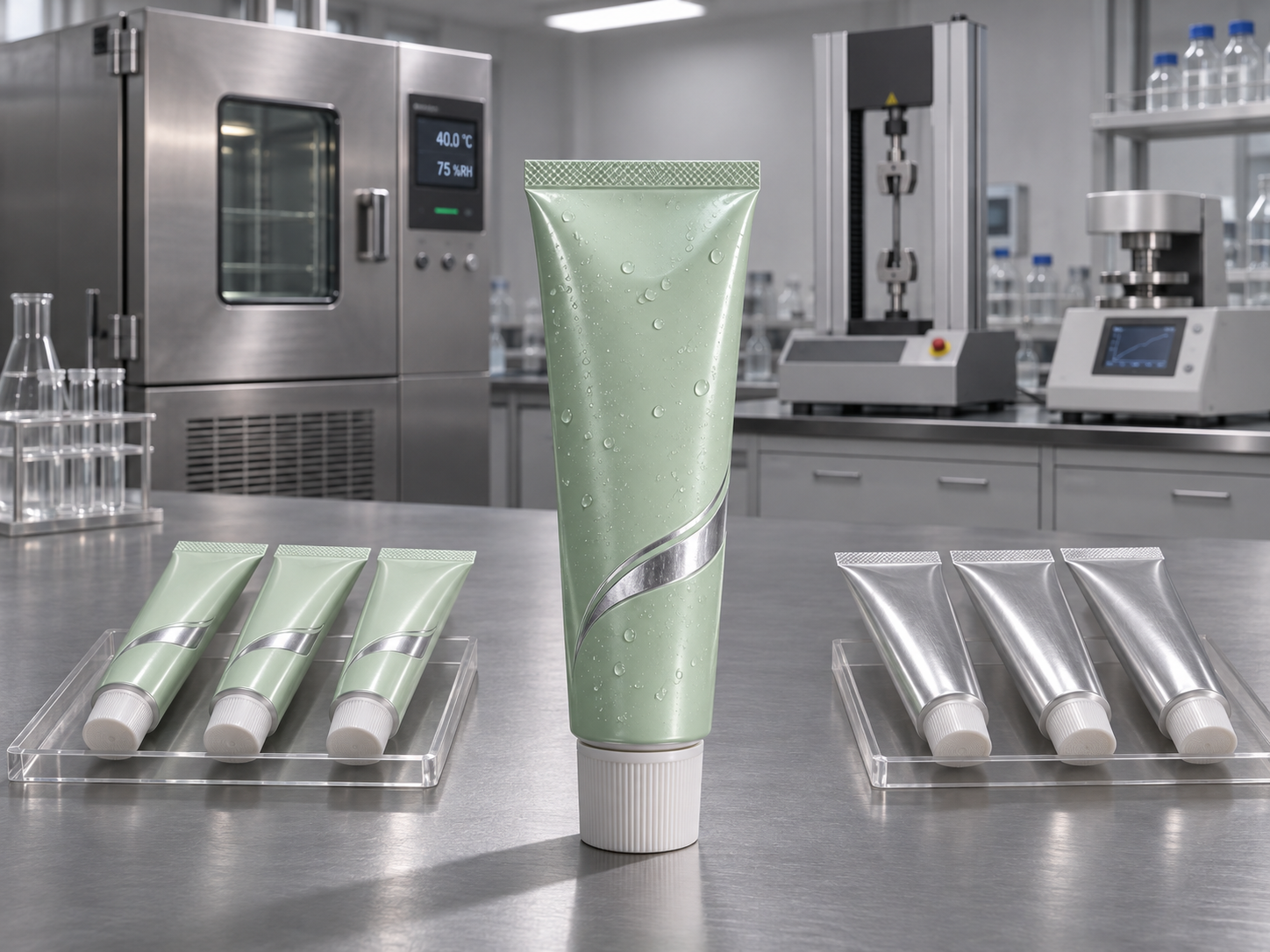
From Our Factory Floor: A Practical Guide for Brand Owners
Based on our years of experience servicing toothpaste, cosmetic, and pharmaceutical brands, we've learned that while ABL tubes offer fantastic barrier protection, that thin inner aluminum layer can be a headache if your formula isn't compatible. We've seen too many brands assume a standard room-temperature test is enough, only to face leakage or pinholes 6 months later.
Here are the four practical tests we always recommend running before locking down a formula:
1. The Accelerated Hold Test (The "First Gate")
What we do: Fill your real formula into the ABL tubes and run them at 40°C / 75% RH for 30–60 days. (Add a 48°C stress test if you're doing sunscreens or highly reactive actives).
What we look for: Don't just look for obvious swelling. We check for delamination (is the aluminum separating from the plastic?) and inner-layer softening. If the formula eats away the inner protective layer in 30 days, it's a dead end.
2. Post-Contact Barrier Testing (Catching the Invisible)
What we do: We measure Oxygen (OTR) and Moisture (WVTR) transmission on tubes that have already held the formula for a while, not just new tubes off the line.
What we look for: This catches micro-pinholes and foil corrosion that the naked eye can't see. A whitening gel might look fine in the tube, but if the fluoride is losing efficacy because a tiny pinhole opened up in the foil, your product is failing quietly.
3. pH Window & Chemical Resistance (Know Your Limits)
What we do: We cross-check your formula's pH against the inner layer's tolerance. Standard ABL generally handles pH 4 to 9.
What we look for: Be very careful with acidic actives (like high-load Vitamin C or AHAs) or highly alkaline formulas. If you are at pH 3.5, that acid will slowly eat the aluminum foil. Unless you pay for a special high-barrier protective coating, stick to the safe window.
4. Aged Seal & Burst Test (The Leakage Preventer)
What we do: Test the seal strength and burst pressure on the tubes after the 30-60 day accelerated hold, not just right after sealing.
What we look for: Surfactants and certain oils in your formula can creep into the seal area and plasticize the inner PE layer. The seal might pass on day 1, but peel open on day 30. Testing aged seals is the only way to stop leakage complaints before they reach the consumer.
Our Bottom Line:
Never assume a material is compatible just because it's "pharma-grade." Compatibility is a pairing property—it's about how your specific paste interacts with our specific tube structure. If you change the formula's pH, the active load, or even the inner sealant resin, you must re-test. If you need help running these tests on our ABL structures, talk to our lab team.
Can't find what you're looking for ?
Leave a Message we will call you back quickly!
Product Classification
Professional Service
Interested? Leave your contact details.
Search Starts Here