
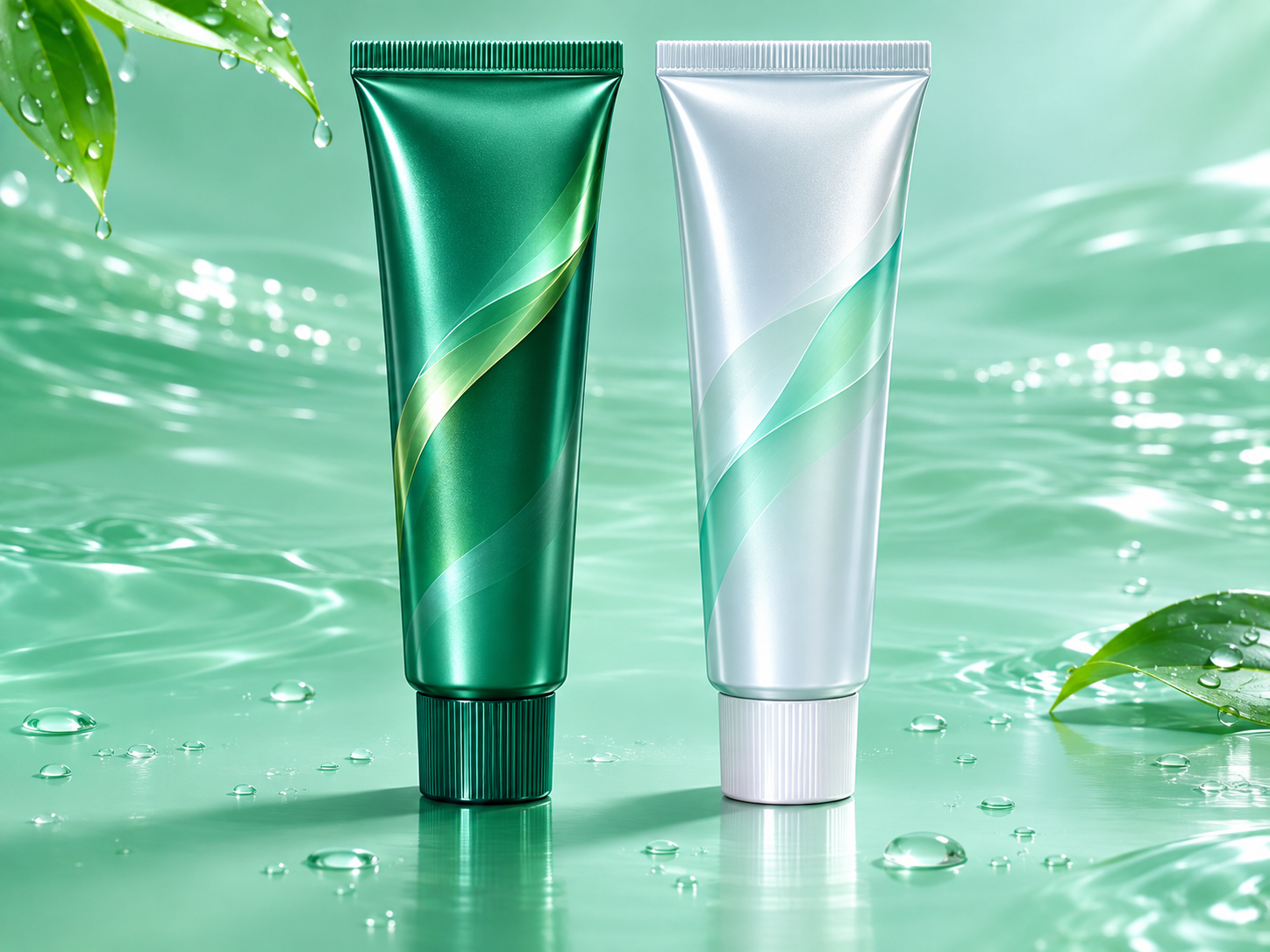
Select a cosmetic tube for hair color by matching the complete package to the specific formulation and its intended shelf life. A tube that holds its shape and seals well when filled with a neutral cream is not necessarily suitable for an alkaline oxidative dye or a peroxide-containing developer. Start with the formula’s contact requirements, then compare the tube’s product-contact layer, barrier construction, shoulder, cap, and seals under realistic storage and dispensing conditions.
For many permanent hair color systems, the colorant and developer are packed separately and mixed shortly before application. Each component therefore needs its own compatibility assessment. Do not assume that approval for the colorant extends to the developer, or that a package qualified for one shade covers an entire shade range without evidence.
Define the product that will contact the tube
Record the formulation’s pH, viscosity, water content, fragrance and solvent components, and relevant reactive ingredients. Oxidative color creams often contain alkaline agents and dye precursors; developers commonly contain hydrogen peroxide. These ingredients create different packaging concerns. An alkaline colorant may challenge a seal or affect an unsuitable contact layer, while peroxide stability can be influenced by contamination and contact with incompatible materials.
Identify whether the product is intended for single or repeated dispensing. A partially emptied tube experiences repeated squeezing, flexing, and exposure of the opening to air and residue. A single-use tube may be squeezed aggressively near the end of dispensing, putting particular stress on the shoulder, folded body, and tail seal.
Define the intended fill temperature, headspace, storage orientation, transport conditions, and shelf-life target before requesting samples. A tube tested upright at room temperature provides limited evidence about a product that will be shipped through hot conditions or stored on its cap.
Compare constructions by the complete contact system
Laminate and extrusion tubes are both available in configurations relevant to hair color. The label alone does not establish compatibility. Request the proposed layer structure and identify every surface that can contact the formulation, including the inner body layer, shoulder, nozzle, closure liner or seal, and any internal coating.
When comparing materials, distinguish a material’s nominal properties from performance in the finished tube. The longitudinal seam in a laminate body, the shoulder joint, and the tail seal are constructed differently from the main wall. A strong barrier film does not compensate for a leaking closure or damaged seal.
For aluminum barrier laminate, pay particular attention to exposed edges and damage at folds, seams, and the nozzle area. A compatible inner layer is intended to separate the formula from the metal; any loss of that separation requires investigation. With plastic barrier structures, ask how the barrier layer performs after tube forming and repeated flexing, rather than relying only on flat-film data.
Set barrier requirements from the failure that matters
Barrier selection begins with the change that would make the product unacceptable. Oxygen ingress can affect oxygen-sensitive colorant ingredients and contribute to shade or performance changes. Water loss or gain can alter viscosity and dispensing. Fragrance or solvent migration can change odor and, in some formulations, influence the package material. For a peroxide developer, the relevant assessment also includes peroxide concentration and gas formation, not simply oxygen transmission through the wall.
Oxygen transmission rate and water vapor transmission rate are useful comparison measures only when the test conditions, units, material structure, and measurement method are comparable. Temperature and humidity affect reported values, and flat-sheet results do not include the closure or seals. Ask whether a figure describes the raw material, a tube wall, or the complete closed package.
Very high wall barrier is not automatically the best choice. If the formula is stable in a lower-barrier construction for the required shelf life, seal quality, dispensing, and package integrity may be more discriminating. Conversely, a good initial stability result in an open or loosely capped laboratory container cannot establish shelf-life performance in a sealed tube.
Evaluate seals, closures, and dispensing together
The tail seal must accommodate the actual tube material, fill-line conditions, and formulation. Product contamination in the sealing area can prevent a sound bond even when the nominal seal temperature is correct. Excessive heat or pressure can also damage a laminate or distort the tube. Establish a processing window using filled tubes, then examine seal appearance and integrity across the range of expected production settings.
The shoulder-to-body joint and nozzle are equally important. Inspect for cracks, incomplete bonds, distortion, and leakage after storage and compression. For a tube with a foil membrane or other tamper-evident seal, confirm that the membrane adheres to the specified opening, remains intact in storage, and can be removed or pierced as intended without leaving fragments in the product.
Cap fit should be assessed after contact with the formula and after temperature cycling. Examine threads, liners, and the sealing surface for swelling, stress cracking, residue buildup, and leakage. A dry cap torque measurement is useful for process control, but it does not establish that a filled tube will remain leak-tight after storage or repeated opening.
Dispensing tests should use the intended nozzle diameter and product viscosity. A narrow opening may give controlled application yet demand excessive squeezing force as the product thickens at low temperature or ages. A wide opening may dispense more easily but make dose control difficult. Assess flow at the beginning and near the end of the fill, including the amount retained in the shoulder and folds.
Build a compatibility study around the finished pack
Use production-representative tubes, closures, seals, and filling conditions wherever possible. Lab-filled samples are useful for early screening, but hand sealing or a substitute cap can conceal a production issue. Retain samples of the unfilled components and the bulk formulation so that a change in the filled pack can be investigated against a baseline.
Test the proposed commercial formulation, including representative shades and any variants with materially different ingredients or concentrations. Screen at the intended fill volume and headspace. Include upright and inverted storage, and use an orientation that keeps the formulation in contact with the closure and shoulder. Set the test duration and conditions against the intended shelf life; elevated-temperature testing is useful for screening, but it does not independently prove real-time stability.
At defined intervals, compare the filled packs with baseline and control samples. The observations should link package condition to product performance:
- Measure relevant formulation properties, such as pH, viscosity, appearance, odor, and active content where applicable. For colorants, include a suitable color development or shade-performance assessment.
- Inspect the tube for swelling, paneling, softening, discoloration, delamination, cracking, and changes around the shoulder and seals.
- Assess leakage and seal integrity before and after storage and mechanical handling. Use a method suited to the pack and record its acceptance criteria.
- Repeat dispensing and closure tests on aged samples, including partially emptied tubes when resealing is part of the intended use.
Agree on acceptance limits before testing. A slight appearance change in the tube may be cosmetic, while a small shift in an active ingredient could be significant to product performance. Conversely, a stable analytical result does not resolve a package that leaks or splits during normal dispensing. Evaluate both sets of results against their own criteria.
Interpret similar symptoms carefully
A swollen tube does not, by itself, identify the cause. Gas generation from product decomposition, trapped air expansion during heating, and an interaction involving a package component can produce similar outward changes. Compare internal pressure or gas observations where feasible, formulation assay results, storage temperature, and control samples before changing the tube specification.
Likewise, a loss of product mass is not automatically evidence that the body wall has inadequate moisture barrier. Leakage at the cap, nozzle membrane, shoulder, or tail seal can produce the same result. Examine the package and test the closure and seals before attributing the loss to permeation.
Discoloration at the tube surface also needs location-specific investigation. A change confined to printed outer layers points to a different mechanism from discoloration in the product-contact layer or formulation. Record where the change starts, whether it follows a seam or fold, and whether it appears in unfilled controls exposed to the same conditions.
Move from sample approval to a controlled specification
Once a construction passes the agreed evaluation, document the features that produced the result: body structure and wall specification, contact-layer material, shoulder and cap materials, nozzle geometry, seal configuration, and relevant filling conditions. Preserve approved samples and the test record alongside the formulation version and closure details.
A change in inner resin, barrier layer, adhesive, shoulder material, cap liner, or sealing process can alter performance even when the tube looks identical. Assess proposed changes against the original study and repeat the affected tests when equivalence has not been established. The resulting specification ties the chosen cosmetic tube to the formula and production conditions that were actually evaluated.
Can't find what you're looking for ?
Leave a Message we will call you back quickly!
Product Classification
Professional Service
Interested? Leave your contact details.
Search Starts Here