
An Engineering Deep-Dive from the Factory Floor
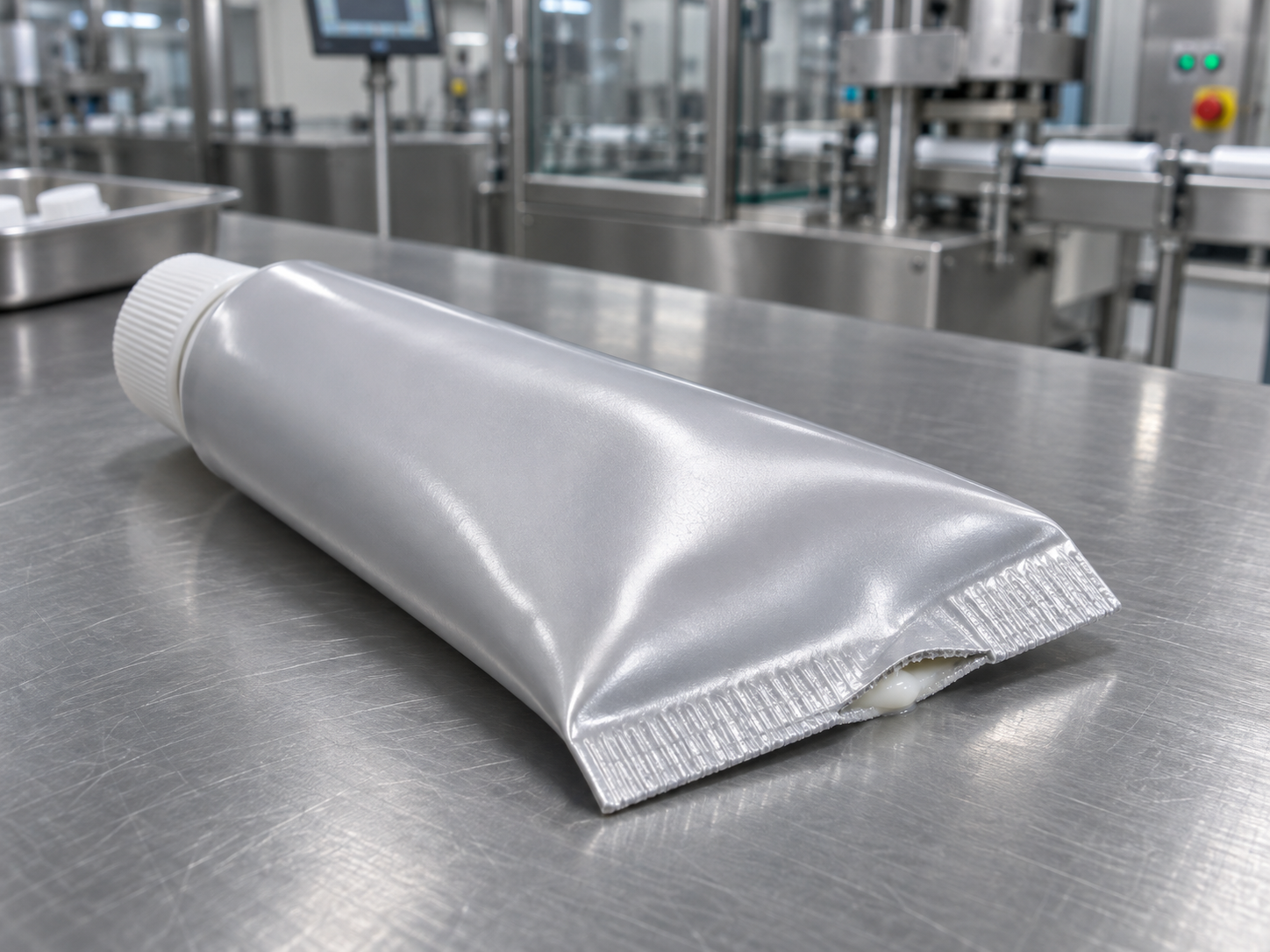
In B2B packaging, there is a term we call the "Warehouse Time Bomb." It’s a pallet of ABL tubes that passed the final QC perfectly. The sealing jaws looked great, the pressure test was green, and they shipped. Three months later, the brand owner opens a case, only to find a sticky mess. The bottom seals haven't burst open; they've simply peeled apart, silently leaking the formula.
If you ask a rookie engineer, they’ll blame the raw material. But after decades of running ABL tube lines for global pharma and oral care brands, we know the truth: That is a "False Seal," and 90% of the time, the assassin is microscopic seal contamination.
Let's dissect exactly how a few invisible droplets of paste manage to defeat a heavy industrial heat-sealing machine.
Phase 1: The Physics of a "False Seal" (Why it passes Day 1 but fails Month 3)
ABL tube sealing isn't gluing; it is the melting, flowing, and re-crystallizing of the inner PE (Polyethylene) layers under precise heat and pressure. When we talk about "seal strength," we are actually talking about chain entanglement—how well the polymer chains from the left jaw interlock with the chains from the right jaw.
When your formula contaminates the seal zone, it alters the surface energy of the PE.
The Lubrication Effect: Most toothpaste gels, creams, and ointments contain surfactants, glycols, or silicone oils. These molecules wedge themselves between the PE layers. They act as a boundary lubricant, preventing the polymer chains from ever touching each other.
The Thermal Sink: Water or solvent droplets trapped in the seal zone will vaporize rapidly under the hot sealing jaws. This creates micro-bubbles or pressure pockets that physically push the PE layers apart from the inside.
The Time Delay: The seal looks perfect on Day 1 because the mechanical clamping has temporarily pressed the layers together. But PE is a viscoelastic material. Over time, under the stress of the cap’s spring force or simply gravity, the contaminated interface undergoes creep (cold flow) and peels apart.
Phase 2: The Three Hidden Sources of Contamination
You know about filling splashes. But the dangerous sources are the ones you can't see:
1.The Capillary Climb (Surface Tension Failure): After the tube is filled, it rides the conveyor. If your formula has a low surface tension (very common in transparent gels or highly concentrated fluoride pastes), it will climb the inner walls via capillary action. Before the tube even reaches the sealing jaws, a microscopic film of formula has already coated the seal zone.
2.Thermal Aerosolization: In high-speed rotary filling, the vacuum suck-back mechanism can sometimes "boil" volatile components of the formula, creating a fine aerosol mist that settles on the inner shoulder and seal area.
3.The "Overheat" Trap: Here is where factory experience matters. When operators see a weak seal, their instinct is to crank up the temperature. This is a fatal mistake. If there is sugar or polymer contamination in the seal zone, excessive heat will caramelize or scorch the formula, creating a brittle, carbonized layer that acts like a micro-knife, cutting through the PE seal upon cooling.
Phase 3: The Factory Counter-Strike (How We Engineer Around It)
We cannot rely on the brand owner’s formula to be "seal-friendly." We must engineer the solution on the tube line.
High-Intensity Pulsed Air (Not Just Blowing): Standard compressed air nozzles only clear surface droplets. We use high-frequency pulsed air knives positioned at a precise angle to create a vortex, mechanically lifting and blasting away the thin capillary film before the jaws engage.
Corona Treatment on the Inner Layer: For highly aggressive formulas, standard LDPE inner layers aren't enough. We can apply inline Corona treatment to the inside of the tube right before sealing, temporarily increasing the surface energy (Dyne level) of the PE so it aggressively repels oily contaminants.
The "Cooling Jaw" Technique: We use a two-stage sealing process. A primary hot jaw fuses the PE, followed by a chilled jaw that locks the material under pressure while it solidifies. This prevents the material from shrinking and peeling while still hot.
Creep Testing (The Final Truth): We don't just do a standard 1-day pressure test. We take the sealed tubes, fill them with a surrogate formula, and hang them in a 50°C oven for 14 days with weights attached to the bottom. If the seal creeps even 1mm, it fails.
The Factory Bottom Line:
Seal contamination is a silent killer. If you are designing a highly concentrated, surfactant-heavy, or low-surface-tension formula (like a whitening gel or a pharmaceutical suspension), do not treat the sealing process as a "standard step." Talk to your tube manufacturer. Ask them about their air-knife configuration, their inner-layer resin grade, and their creep testing protocols. If they just say "we use good glue," run.
Can't find what you're looking for ?
Leave a Message we will call you back quickly!
Product Classification
Professional Service
Interested? Leave your contact details.
Search Starts Here