
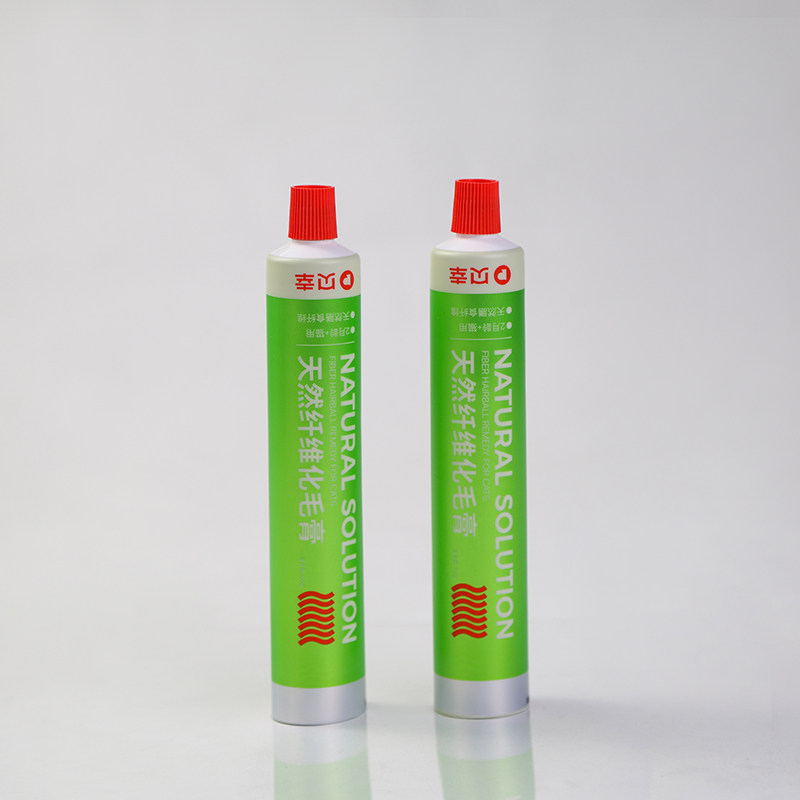
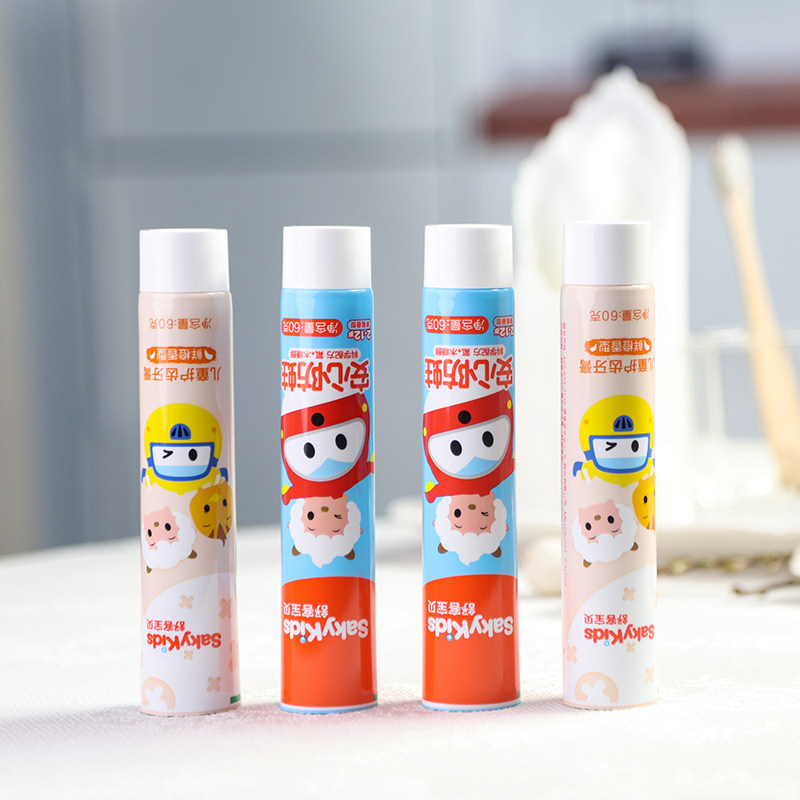
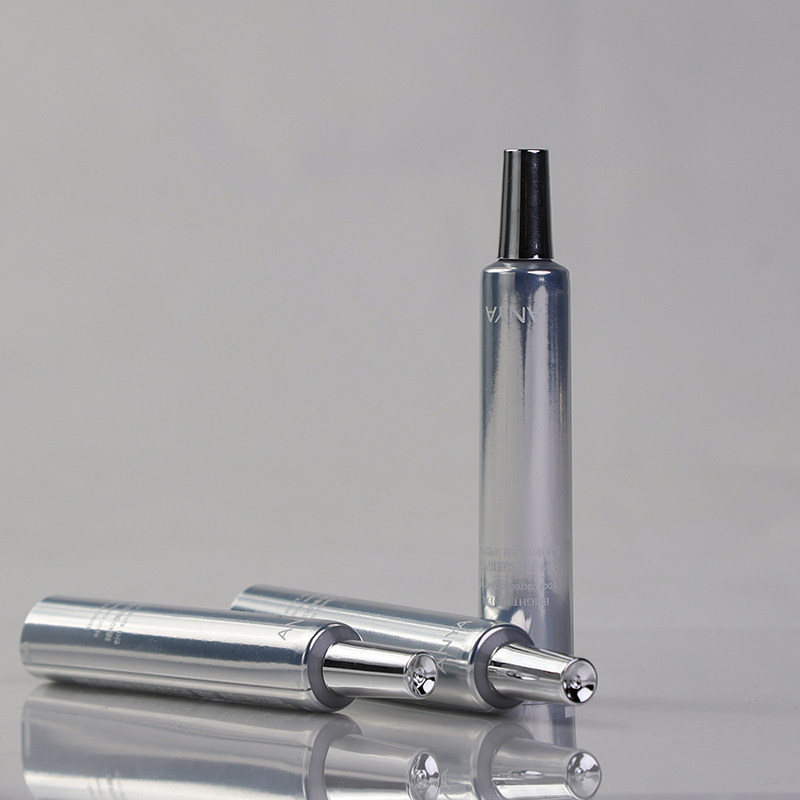
Three printing methods dominate flexible packaging production: offset, flexographic, and rotogravure. Each produces a different result on the same tube, and each carries a different cost structure at different order volumes.
Choosing incorrectly is expensive. A brand that specifies rotogravure for a 5,000-unit launch pays for cylinders they will never amortize. A manufacturer that specifies offset for a metallic-finish cosmetic tube discovers the effect cannot be achieved.
This guide covers how each process works on laminate substrates, where the cost break-even points sit, and which process matches specific product categories.
How Each Process Works on Laminate Substrates
Offset printing transfers ink from a plate to a rubber blanket, then onto the tube body. The rubber blanket conforms to the curved surface, producing sharp dot reproduction. On laminate tubes, offset is applied to the outer PE layer after corona treatment, which raises the surface tension enough for ink adhesion.
Flexographic printing uses raised-image photopolymer plates and fast-drying liquid ink. It is applied to the flat web before the tube is formed, which makes it faster for long runs but limits fine detail — the raised plate compresses under pressure, softening edge definition.
Rotogravure printing etches the image into cells on a copper cylinder. Ink sits in the cells and transfers directly to the web. This produces the heaviest ink density of the three methods, which is why it dominates in markets where saturated solid colours and metallic effects are expected.
The critical distinction for laminate packaging: offset prints on the formed tube, while flexo and gravure print on the flat web before forming. This single difference drives most of the practical trade-offs below.
Process Comparison
Where the Cost Break-Even Actually Sits
The economics are driven by setup cost, not per-unit cost.
Offset has minimal setup — plates cost little and take minutes to mount. This makes it the default choice for orders under roughly 50,000 units per size, and for brands running multiple SKUs where each SKU would otherwise require its own cylinder set.
Flexographic setup sits between the two. It becomes competitive on long runs of a single design, particularly where the artwork is simple — two or three spot colours, no gradients.
Rotogravure requires a dedicated copper cylinder for every tube size and every design revision. If you change the artwork, you pay for a new cylinder. This makes it uneconomical below roughly 100,000 units per size, but highly competitive above that threshold.
Practical implication: if you are launching a new product and expect volume to grow, starting on offset and migrating to gravure once volume justifies it is usually the lowest-risk path. The artwork can be carried across unchanged.
Why White ABL Tubes Print More Accurately?
This is a specification detail that catches buyers out.
On a clear or translucent tube, the printed colour is influenced by whatever is behind it — the product inside, the shelf, the consumer's hand. A red logo printed on a clear tube over a white cream will read differently than the same logo over a translucent gel.
White pigment in the outer PE layer provides a consistent, opaque base. Ink sits on a uniform white field, so the printed colour matches the proof and remains consistent regardless of fill level or contents.
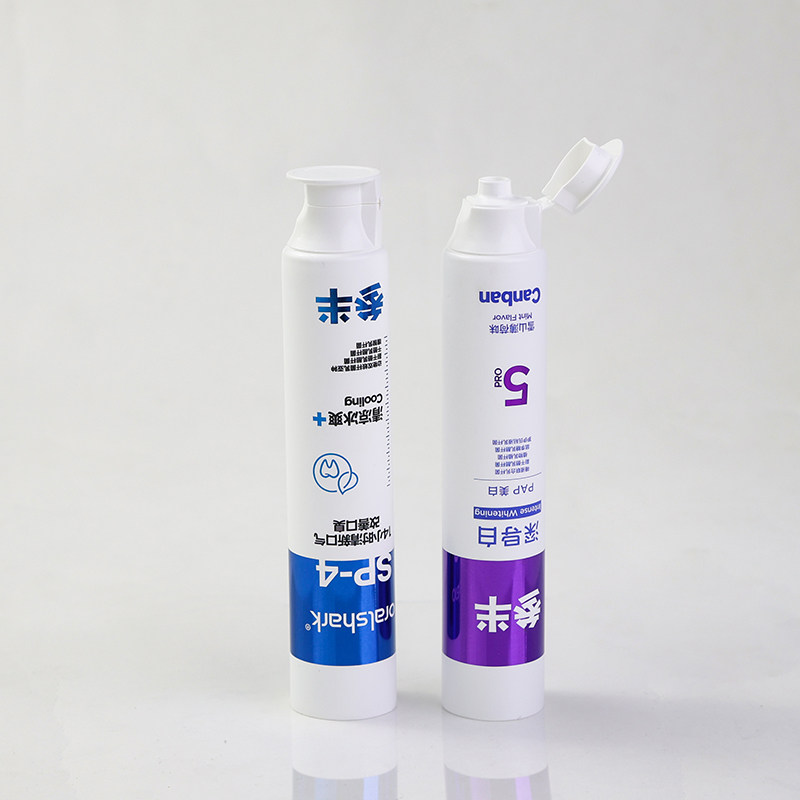
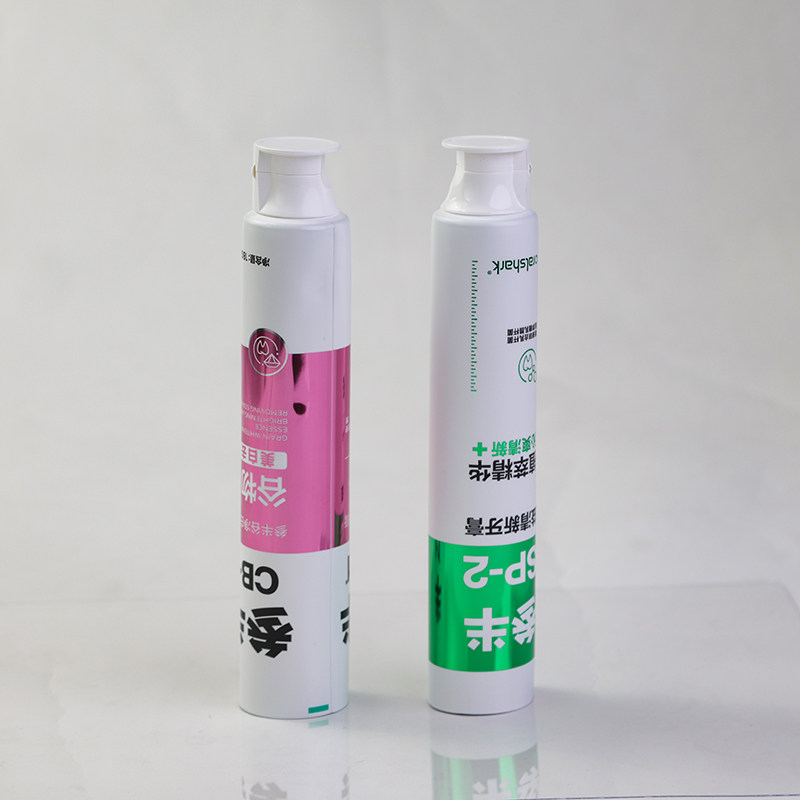
For ABL tubes specifically, the aluminium core is already opaque, so colour consistency is achieved structurally. The white outer layer then ensures the print surface is also uniform. This is why white ABL is the most common specification for pharmaceutical and oral care tubes — the barrier is structural, and the print accuracy is guaranteed.
If you require a clear tube to show the product, expect colour variance between fill levels and plan your artwork accordingly — solid blocks of colour tolerate this better than fine gradients.
Matching Process to Product Category
Pharmaceutical tubes — Offset is the standard. Regulatory text requires small, sharp type, and batch-to-batch colour consistency matters for product identification. Offset at 6–9 colours covers branding, patient information panels, and batch/expiration coding areas without quality loss.
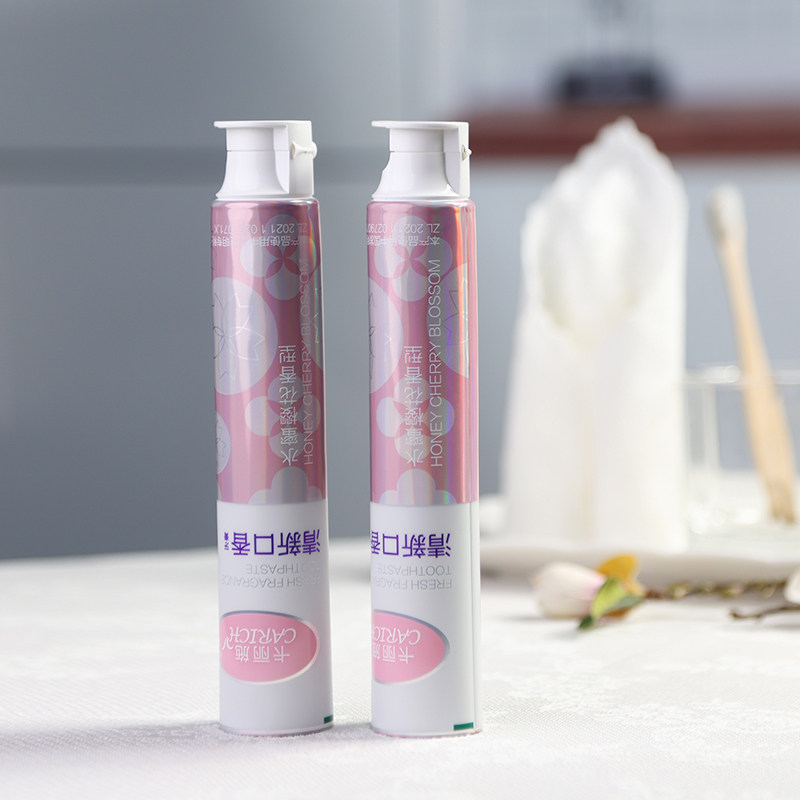
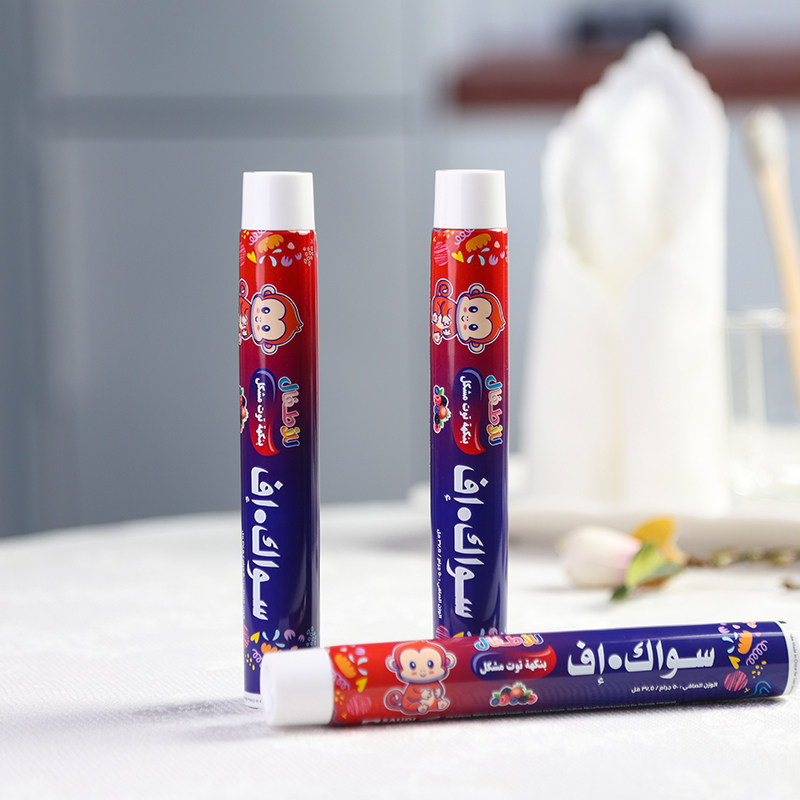
Cosmetic and personal care tubes — Depends on positioning. Mass-market lines typically use offset for cost efficiency. Premium lines targeting metallic or high-gloss effects usually specify gravure, or offset combined with hot stamping and a gloss varnish pass.
Food-grade tubes (tomato paste, honey, chocolate spread) — Offset or flexo. Food packaging prioritises barrier and seal integrity over print sophistication. Where the tube carries a full-colour retail design, offset handles it; where it carries minimal branding, flexo reduces cost.
Laminate pouches — Flexo and gravure dominate, because pouches are printed on the flat web before forming. Offset is not used for pouch production.
Specification Details That Affect Print Outcome
Beyond choosing the process, four specification decisions determine the final result:
Corona treatment level. The outer PE layer must be corona-treated before printing to raise surface tension. Insufficient treatment causes ink to bead or rub off. This is a manufacturing control, but it is worth specifying in your purchase order if you have had adhesion problems with a previous supplier.
Varnish application. A gloss or matte varnish pass over the printed area protects the ink from scuffing during handling and filling. Without it, offset prints on PE can mark during high-speed capping.
Hot stamping position. Metallic effects applied by hot stamping require a clear area on the artwork where no ink is printed. This must be designed in from the start — it cannot be added after the artwork is finalised.
Colour proofing standard. Specify whether you require a physical press proof or a digital proof. Digital proofs cannot accurately predict how ink will sit on PE, so for colour-critical work, a physical proof from the actual production line is worth the lead time.
Common Specification Mistakes
Specifying gravure for a product launch. The cylinder cost is committed before you know whether the product sells. If the design changes after launch, the cylinder is scrapped.
Assuming digital proofs match production. PE is a difficult substrate for colour prediction. Always request a physical proof for colour-critical work.
Designing metallic effects into the artwork without reserving hot stamping area. The effect will not print. It must be a separate process step with reserved space.
Choosing a clear tube for a colour-critical brand. Fill-level variance will cause visible colour shift on shelf.
Not accounting for the seal area. The tail seal and shoulder are not printable. Artwork must be designed around these zones, not cropped into them.
Frequently Asked Questions
Q1:Which printing process does Pactek use?
A:Offset printing, up to 9 colours, with optional hot stamping and gloss or matte varnish. Offset is applied to the formed tube, which allows fast changeover between sizes and makes it economical for orders where multiple SKUs share a production schedule.
Q2:Can you print metallic gold or silver effects?
A:Yes, via hot stamping rather than ink. This requires a reserved area in the artwork where no offset ink is printed. Tell us at the artwork stage, not after approval — the effect cannot be retrofitted.
Q3:Do you provide physical press proofs?
A:Yes. For colour-critical work we recommend a physical proof from the production line, because digital proofs cannot accurately predict ink behaviour on PE substrates.
Q4:What is the smallest text size you can print reliably?
A:Offset holds detail down to approximately 4–5 pt. Below that, we recommend increasing the size or simplifying the typeface, as very small type can fill in during the transfer to the rubber blanket.
Q5:Can you print on clear tubes?
A:Yes. Note that printed colour on a clear tube will shift depending on fill level and contents. If colour consistency is critical, we recommend a white base layer or an opaque tube structure.
Send us your artwork and order volume.
We will confirm which print configuration your design requires, whether hot stamping is needed, and what the realistic unit cost looks like at your volume. If your design would be better served by a different structure or finish, we will tell you before you commit to tooling.
Can't find what you're looking for ?
Leave a Message we will call you back quickly!
Product Classification
Professional Service
Interested? Leave your contact details.
Search Starts Here