
Zipper Pouches Won't Reseal? Before Blaming the Zipper, Check the Seal
Few packaging complaints escalate as quickly as a reclosable pouch that cannot be closed again. The customer assumes the zipper is defective, the brand assumes the supplier cut corners, and the supplier assumes the pouch was filled incorrectly. All three are sometimes partly right, which is exactly why reseal failures are worth specifying and testing before mass production rather than arguing about afterwards.The zipper is rarely the actual defect
Zipper tape is a simple mechanical part: two interlocking profiles that either engage or do not. When a pouch stops resealing, the cause is usually one of four things, and only one of them involves the tape itself.
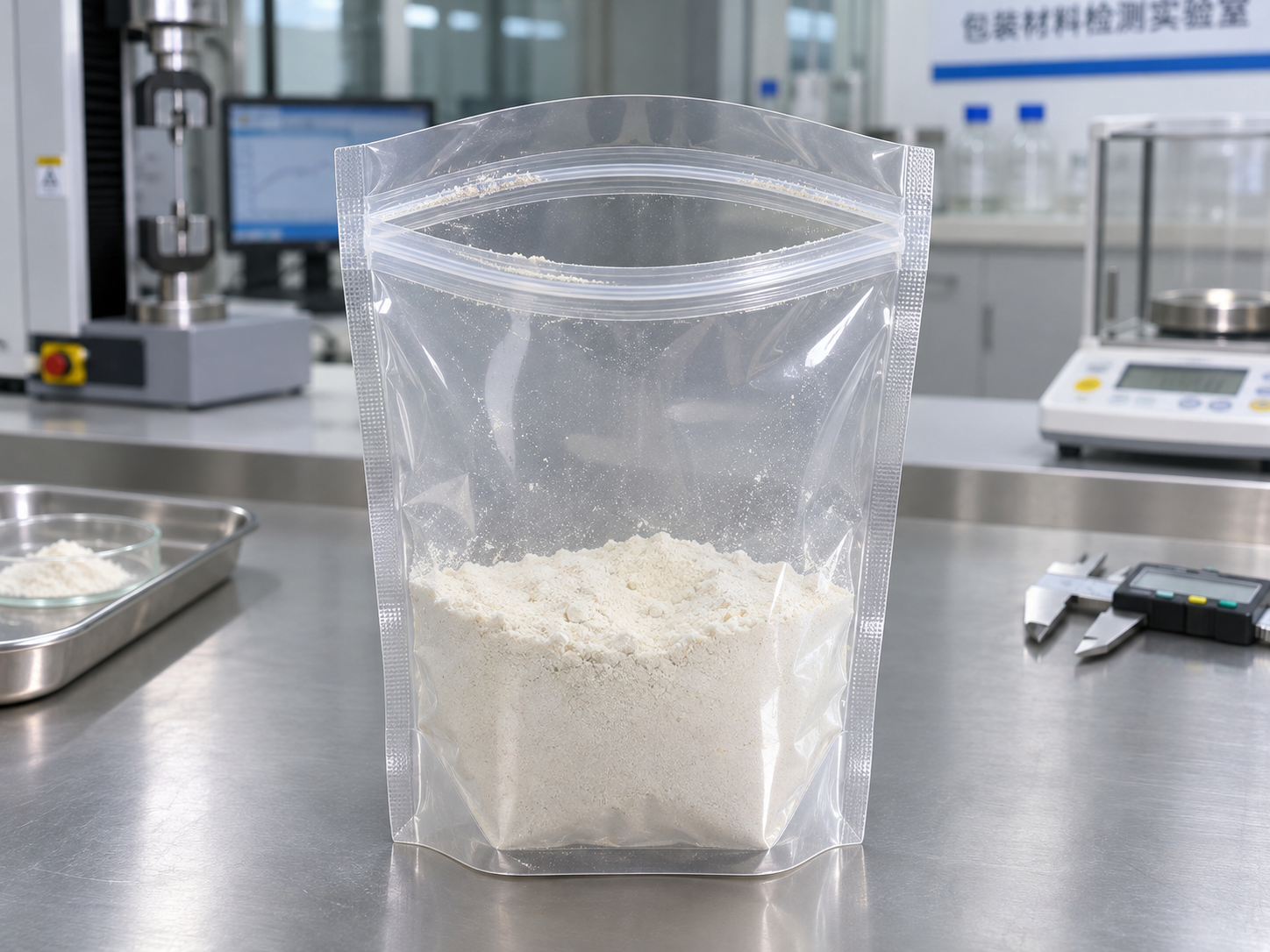
Residue inside the interlock. Fine powders, oils, granules and sticky liquids migrate into the zipper groove during filling and handling. Once the profile is contaminated, the two sides no longer lock, and the failure looks identical to a broken zipper. This is the single most common cause we see on powder and oil-based products, and it is a filling-and-cleaning issue rather than a packaging-material issue.
Heat damage in the sealing window. The zipper is welded into the pouch during the same heat-seal pass that closes the bag. If temperature, dwell time or pressure are set for the film rather than for the zipper tape, the interlocking profile softens and partially collapses near the seal. The pouch seals perfectly — and reseals badly, because the first 10–20 mm of the track no longer engages.
Film shrinkage after sealing. Films shrink when heated. If the zipper is sealed under tension, or if the film relaxes after cooling, the tape can end up slightly wavy or under tension along the seam. A wavy track is harder to close by hand, and users interpret that as a defective closure.
Overfilling and user technique. A pouch filled beyond its designed volume has less free board space around the zipper, and users often pull the slider while the bag is bulged. The closure is fine; the usage condition was never designed for.
What a buyer should actually do
The useful response is not to replace the zipper supplier. It is to make the reseal behaviour an explicit, testable line item.
Define the sealing window in writing. Specify the zipper type, tape position, distance from the seal edge, and the acceptable seal temperature range. Ask the pouch manufacturer to confirm the parameters used for the sealing pass, and keep them in the specification rather than in an email thread.
Require a reseal check on samples, not on the final batch. A practical pre-production check is simple: fill a set of samples with the actual product, run the sealing pass, then have operators close and open the zipper repeatedly and record whether the track engages cleanly from the first attempt. Note any residue in the groove. This costs almost nothing and catches most failures.
Check the seal itself with standard methods. Heat seal strength can be verified with a tensile test method such as ASTM F88, and leak detection can be arranged through dye penetration or pressure-based methods. These are common, well-established flexible-packaging tests, and they are worth specifying in the RFQ so the scope is agreed in advance.
Decide who owns the residue risk. If the product is a fine powder or an oil, the residue problem is largely controlled at the filling station — nozzle design, product temperature, cleaning frequency and fill volume. Put the agreed filling conditions into the document exchange, so that a later complaint can be traced to a cause instead of to a party.
What this means for your next RFQ
Reseal performance is a system property, not a component property. It depends on the tape, the film, the sealing parameters and the filling line at the same time. The buyers who avoid this complaint are usually the ones who wrote four extra lines into the specification: zipper type and position, sealing parameter confirmation, a sample-stage reseal check, and the agreed filling conditions.
Our pouches are produced under an ISO 9001 quality management system with batch traceability, and customer audits plus quality document packages are supported. Product-level testing — including seal strength, leak detection and reseal verification — is arranged through accredited third-party laboratories according to the requirements of your market, before mass production, so that the data matches the structure you actually receive.
This article is a general technical note for procurement and packaging teams. For a specification review of your own zipper pouch, send us the current drawing and the filling conditions.
Can't find what you're looking for ?
Leave a Message we will call you back quickly!
Product Classification
Professional Service
Interested? Leave your contact details.
Search Starts Here