
PRODUCTS
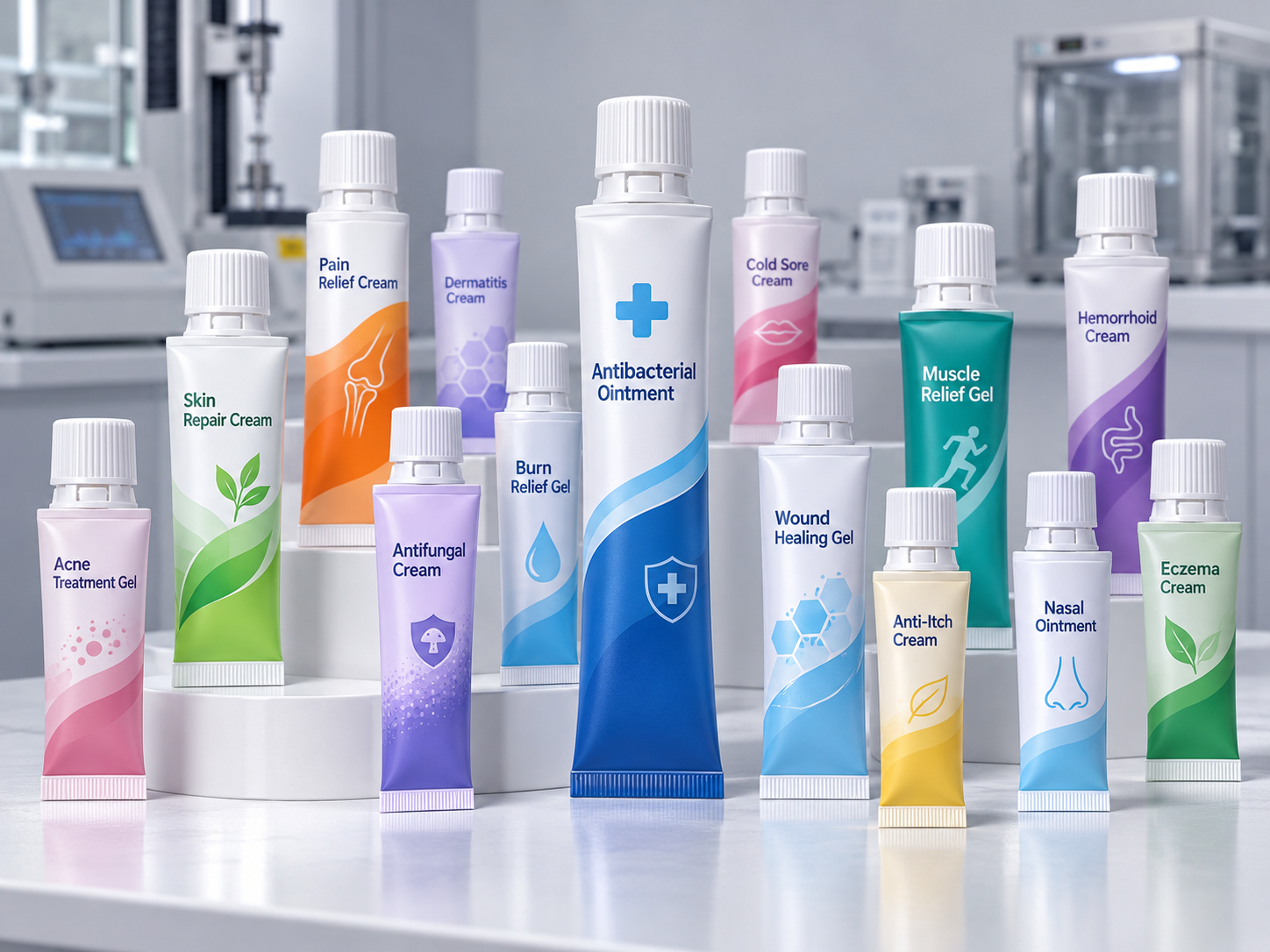
The Mechanical Logic: Why Two Actions Beat One
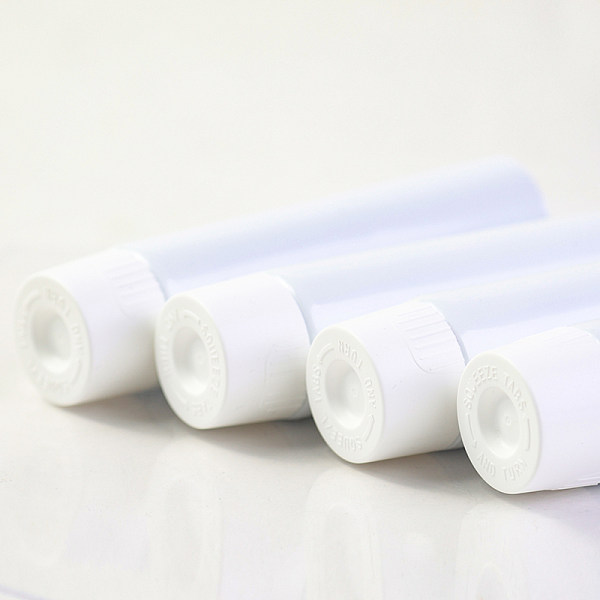
A child-resistant closure does not lock the package. It adds a second, simultaneous action that a young child cannot reliably execute. The two dominant mechanisms differ in how that second action is applied:
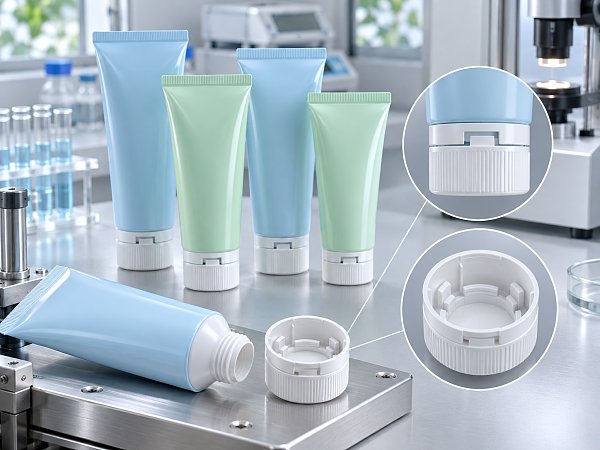
Push-and-Turn (CRC): The user must apply a downward axial force—typically around 30N minimum—while simultaneously rotating the cap counterclockwise. The downward force disengages the ratchet or lug mechanism; the rotation releases the cap. Children under five generally cannot coordinate the two actions, while adults learn the motion after one or two uses.
Squeeze-and-Turn: The user squeezes the cap skirt laterally to disengage internal locking members, then rotates. This provides a higher resistance margin and is specified where the product or market demands additional child-resistance beyond the push-turn baseline.
What “Certified” Actually Requires
Depending on the destination market, the tube-and-cap system must pass one or more of the following:
16 CFR § 1700.20 (US, PPPA): Panel testing with children and senior adults.
ISO 8317:2015 (Europe/international): Reclosable child-resistant packaging—requirements and test procedures.
ISO 13127:2012 (mechanical test methods): Defines the squeeze test, torque release test, non-squeeze torque test, push-and-turn test, and reverse ratchet torque test used to verify the closure's mechanical function before and after panel testing.
Barrier Matching: ABL vs. PBL for CRC Programs
Child resistance is independent of the tube body's barrier layer—but the barrier choice still determines whether the product survives its shelf life inside a CRC tube. We specify the barrier grade based on the formula, not the closure:
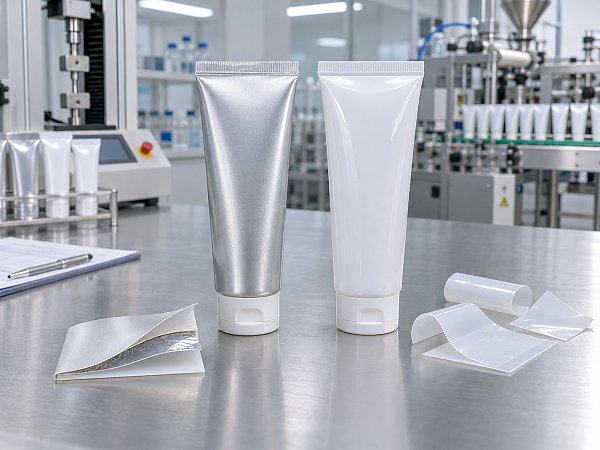
ABL (Aluminum Barrier Laminate): A 12µm aluminum foil layer achieves OTR < 0.05 cc/m²/day and WVTR < 0.1 g/m²/day, making it the baseline for pharmaceutical actives, medicated topicals, and high-oxidation-risk formulas.
PBL with EVOH core: Delivers OTR 0.1–0.5 and WVTR 0.3–1.0 g/m²/day, suitable for premium cosmetics and oral care where a softer feel or greater decoration tolerance is required. If the formula contains solvents or high-load essential oils, PBL may require a compatibility trial before CRC pairing.
Where Certified CRC Laminate Tubes Are Specified
Pharmaceutical & OTC Topicals: Pediatric medications, medicated creams, and oral gels requiring tamper-evident and child-resistant compliance.
Regulated Wellness (CBD/THC Topicals): Products subject to state or federal child-resistant packaging rules alongside labeling requirements.
Pediatric & Sensitive-Use Formulas: Fluoride toothpaste, medicated balms, and vitamin gels where accidental ingestion risk drives packaging specification.
Household Chemical Gels: Adhesives, pesticides, and cleaning gels where ingestion hazard classification triggers CRC requirements.
Frequently Asked Questions
Q1: Can we buy the CRC caps separately and pair them with our existing laminate tubes?
A: No—not for a certified program. The child-resistance certification applies to the assembled tube-and-cap system as tested, not to the cap alone. A cap certified on a 22mm tube may not achieve the same resistance on a 25mm or 30mm shoulder. If you change the tube diameter, wall thickness, or shoulder geometry, the pairing must be re-tested. We supply CRC tubes as a matched system and can provide the panel test report for the exact combination ordered.
Q2: What is the difference between “push-and-turn” and “squeeze-and-turn” in practice?
A: Push-and-turn requires a downward force (typically around 30N) while rotating; squeeze-and-turn requires lateral compression of the cap skirt while rotating. Squeeze-and-turn generally provides a higher resistance margin and is specified when the product or market requires additional child-resistance beyond the push-turn baseline. Push-and-turn is the more common choice for laminate tubes because it is more intuitive for adults after first use.
Q3: Does adding a CRC cap reduce the tube's barrier performance?
A: The CRC mechanism sits in the closure, not in the laminate wall. Barrier performance is determined by the tube body structure—ABL foil, PBL EVOH, or standard PE. However, the seal between the cap and the tube shoulder must be verified, because a poorly engaging CRC closure can create a moisture ingress path independent of the wall barrier. We test seal integrity on the assembled CRC system, not on the tube alone.
Q4: What torque should our filling line apply when closing a push-turn CRC tube?
A: Torque alone is not a sufficient specification for a push-turn closure—the engagement angle matters as much as the peak torque value. A torque that is too low leaves the cap under-engaged; too high can damage the ratchet. We provide a recommended application torque range and engagement verification method for the specific cap-and-tube pairing, based on the mechanical test protocols in ISO 13127.
Q5: Do you provide the child-resistance test report, or only the cap supplier's certificate?
A: We provide the panel test report for the specific tube-and-cap combination supplied to you, not a generic cap certificate. If your market requires 16 CFR § 1700.20 or ISO 8317 compliance, the report must reference the exact tube diameter, shoulder geometry, and closure model. We coordinate third-party panel testing for the assembled system and release the report with the production batch.
 Which Tests Check Formula Compatibility With ABL Tubes?
 How Should ABL Tube Quality Requirements Be Set in a Contract?
 How Do Sealing Settings Affect ABL Tube Leakage?
 How Does Seal Contamination Cause ABL Tube Leaks?
 Child-Resistant Laminated Tubes: What B2B Buyers Need to Verify Before the First PO
") ABL Laminated Tubes: The Complete B2B Selection Guide (2026)
 Professional PE Squeeze Tubes for Toothpaste & Personal Care Packaging
 Mini & Travel-Size Composite Tubes
 Aluminum Plastic Laminate Tube With Twist-Off Nozzle Tip
 Pharmaceutical & Medicated Gel Laminated Tubes
 Premium Multi-Layer Laminated Tubes for Pet Hairball Remedies & Functional Gels
 ABL250/12 White Laminate Tube with Full-Diameter Screw Cap for Kids Toothpaste
—22mm-Diameter") Laminated Tube (Children's Toothpaste Tube)—22mm-Diameter
 Smart Co-extrusion Soft Tube with Functional Head
 ABL Laminate Tube for toothpaste and pharmaceutical
 Child Resistant Aluminum Barrier Laminate Flexible Tube
 ABL-Aluminum Barrier Laminate Tube with Flip Top for Toothpaste
Professional Service
Interested? Leave your contact details.
Search Starts Here